Digital image ethics now belongs in every serious discussion about professional portraits, posing, wardrobe, and AI-assisted image editing. The xAI lawsuit over Minnesota’s nudification law is not only a technology dispute. It is also a reminder that a person’s body position, clothing, expression, and likeness can be misused when image tools are handled without clear consent and review.
As a fashion educator, I often teach that clothing and body language communicate before a person speaks. A structured jacket, relaxed shoulders, open hands, or a confident seated posture can support credibility. Those same visual details can also be distorted if an image is altered into an intimate or sexualized context the person never agreed to. That is why compliance is not only a legal department concern. It affects creative directors, photographers, stylists, recruiters, content teams, and anyone approving images for public use.
This guidance is practical operating advice, not legal advice. Teams working under Minnesota law or using AI image tools should speak with qualified counsel. Still, there are clear habits that any image team can adopt now: obtain specific consent, avoid ambiguous image use, document approvals, and review how pose and wardrobe choices could be misread or misused.
Digital Image Ethics And The Minnesota Law
What The Law And Lawsuit Changed
On May 7, 2026, Minnesota enacted HF 1606, Minn. Stat. § 325E.91, described in the federal court record as the first U.S. state law banning AI nudification tools. It went into effect on August 1, 2026. The law restricts companies that own or control websites, applications, or services from allowing users to access, download, or use a service to nudify an image or video, or from doing that work on a user’s behalf. The statute defines nudification broadly as altering or generating an image to show intimate parts not depicted in the original, realistic enough that a reasonable person would believe they belong to the identifiable person. The September 4, 2026 court order also denied xAI’s motion for a preliminary injunction, so the ban remained in effect while the litigation continued as of September 13, 2026; the order cited legislative-hearing figures that, in the first 11 days after Grok’s image editing feature launched, about 3 million sexualized images were created, including about 23,000 depicting children, with about 65% of photos in that period described as photorealistic sexualized images court order.
xAI filed its lawsuit on July 27, 2026, challenging the Minnesota law on First Amendment grounds and arguing that the law is overbroad. Reporting on the suit also noted that xAI said it had restricted some image generation and editing features to paying users and claimed it geo-blocked editing of images of real people in revealing clothing in regions where local laws prohibit such depictions xAI lawsuit report. Those claims do not remove the need for image teams to set their own consent and review practices.
Why The Facts Matter For Creative Teams
Good digital image ethics starts with the person in the image, not the tool. If a portrait was taken for a staff directory, that does not mean it should be used for AI tests, advertising concepts, training samples, or altered pose experiments. If a model consented to a fashion shoot in swimwear, that does not mean the image may be edited into a more intimate depiction. The purpose matters. The setting matters. The written permission matters.
For posing and body language, the risk is especially direct. A pose can suggest confidence, relaxation, vulnerability, flirtation, authority, or athletic movement. Wardrobe changes the reading of that pose. AI editing can then change the meaning again. A harmless shoulder turn, cropped frame, or reclining pose may become high-risk if a tool can modify clothing or intimate body areas. The safest practice is to avoid giving any system image material that you would not be comfortable explaining to the subject in plain language.
Why Posing And Body Language Need Consent
A Digital Image Ethics Checklist For Posing
Before a shoot, define the intended use of the images in writing. A headshot for a professional profile, a fashion portfolio, a wellness campaign, and a theatrical character study all carry different expectations. The subject should know where images may appear, whether editing will occur, whether AI tools will be used, and whether any derivative images may be created.
During a session, keep verbal direction clear and respectful. Instead of asking for vague poses that could feel uncomfortable, explain the communication goal: “open posture for approachability,” “chin level for authority,” or “hands relaxed to reduce tension.” This approach helps the subject understand why a pose is being requested. It also gives them language to refuse or adjust the pose without feeling they are blocking the creative process.
- Use consent forms that separate capture, retouching, publication, AI editing, and reuse.
- Do not upload client, employee, student, or model images into AI tools unless that use is specifically approved.
- Reject edits that change clothing coverage, body exposure, or intimate meaning without explicit permission.
- Keep original files, approved edits, and release language organized for later review.
- Give subjects a practical contact route for withdrawal requests or image-use questions.
This is also where wardrobe education helps. Clothing can clarify intent. A blazer and neutral background usually support a professional reading. Activewear may support movement and health messaging. Costume or performance clothing may suit theatre or arts promotion. The problem is not any one garment. The problem is using pose, wardrobe, or editing in a way that changes the agreed message of the image.
A Practical Review Process For Professional Images
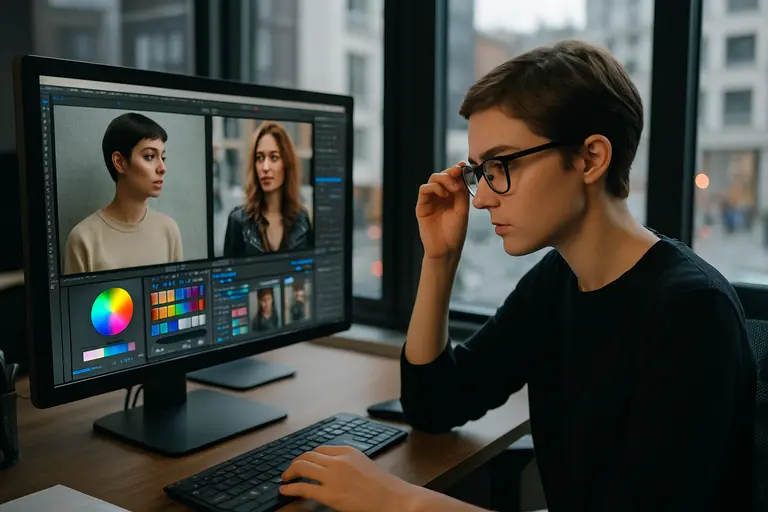
Separate Correction From Meaning Change
Not all editing creates the same ethical risk. Color correction, basic exposure adjustment, and minor lint removal usually preserve the meaning of the original image. Changes to body shape, clothing coverage, skin exposure, posture, or facial expression can alter meaning. If an edit changes what the person appears to have worn, done, or consented to, treat it as a new image requiring fresh approval.
For professional communication, image trust is fragile. Recruiters, clients, audiences, and colleagues read visual cues quickly. A polished image can help, but a misleading image can damage credibility. That applies to AI headshots, synthetic portraits, edited campaign images, and before-and-after styling content. For related brand checks, I also recommend reviewing image dignity practices, especially where intimate-image risks and brand approvals overlap.
Teams that work with children, families, or community programs should be even more cautious. A site such as Talk and Play provides resources for youth engagement, reinforcing the principle that images of all subjects should be respectful and consent-driven, mirroring the central ethos of youth-facing initiatives.
Build A Small Approval Chain
A large process is not always necessary. A small, repeatable approval chain can prevent most avoidable mistakes. One person should confirm consent. A second person should review the edit against the approved purpose. A third person, when the image is sensitive, should ask whether the pose, crop, wardrobe, or caption could reasonably imply something the subject did not agree to communicate.
For a stylist, photographer, or content manager, this review should happen before publication, not after a complaint. Ask simple questions: Does the image still match the original purpose? Has the person’s clothing coverage been changed? Has body language been made more intimate than the session direction? Would the subject recognize the final image as a fair use of their likeness? If the answer is uncertain, pause the use and seek written approval.
Digital image ethics also requires restraint with storage. Keep only what the project needs. Limit access to source files. Do not use outtakes as casual test material. Images rejected by the subject should not become internal examples, AI prompts, or training assets. The fact that a file exists on a company drive does not mean it is available for every later creative idea.
Digital Image Ethics After The xAI Lawsuit
The xAI lawsuit will continue to raise hard questions about speech, platform duties, consent, and the reach of state law. For image professionals, the practical lesson is already clear enough: do not wait for a final court outcome to strengthen image handling. The safest professional standard is to treat the body in an image as belonging to the person, not to the file owner, software operator, or content calendar.
That means pose direction should be transparent. Wardrobe should support the agreed purpose. AI editing should be disclosed and limited. Approval should be documented. Sensitive changes should require a new yes, not an assumption based on an old release.
Strong digital image ethics protects more than compliance. It protects trust. A person who feels respected during a session is more likely to communicate naturally through posture, expression, and clothing. A team that respects likeness rights is less likely to publish an image that feels exploitative or misleading. In professional settings, that trust is part of the message the image sends.