Understanding dress code expectations is less about performing a perfect office persona and more about reducing uncertainty before a professional interaction. As a branding strategist, I treat clothing as one part of session preparation: it should support credibility, comfort, and the role you are there to play.
That session might be a job interview, a first week in a new office, a client presentation, a team offsite, a headshot appointment, or a video meeting with senior leaders. In each setting, clothing sends signals before you speak. Those signals do not need to be expensive or dramatic. They need to be readable.
The challenge is that many workplaces no longer communicate attire standards with the same formality they once did. Some teams have written policies. Others rely on habit, manager preference, customer contact, safety needs, or the tone of the industry. That leaves employees trying to interpret what “professional,” “business casual,” “smart casual,” or “camera-ready” means in practice.
How Dress Code Expectations Shape Professional Presence
Workplace attire has become less uniform, but that does not mean appearance has stopped mattering. It means employees often need better preparation before deciding what to wear.
What The 2025 Polls Suggest
A January 2025 Monster poll of more than 1,300 U.S. workers found that 43% said they had not worked in an office with a dress code in the prior year. Among the 57% who had one, 63% described it as business casual, according to Monster’s workplace dress code poll. That finding supports what many employees experience: business casual often acts as the middle lane between formal presentation and everyday comfort.
A separate report on the USA TODAY / Monster survey said 61% of employees reported that their workplace dress code had changed since the start of the COVID-19 pandemic. The same report said 44% of employees would consider changing jobs if a company’s dress code better matched their personal style or preferred level of formality, according to this Bizwomen report.
Those numbers do not tell every employee exactly what to wear. They do show that attire is tied to belonging, comfort, and workplace fit. If people are willing to weigh dress standards while considering jobs, clothing is not a trivial detail. It is part of the daily experience of work.
Preparing For Interviews, Office Days, And Video Calls
Preparation works best when it is practical. Instead of asking, “What outfit will impress everyone?” ask, “What outfit will help people understand that I am prepared for this setting?” That shift takes pressure off the clothes and puts the focus back on the purpose of the meeting.
Read Dress Code Expectations Before The Session
The best way to read dress code expectations is to collect clues from several places. Look at the company’s careers page, employee photos, public event images, recruiter emails, video call tone, and any written policy shared during onboarding. If you visited the office, recall what people doing similar work actually wore, not just what leaders wore in formal portraits.
This is also where internal culture matters. A finance team, retail floor, design group, nonprofit office, and technical support team may all use the same phrase, such as business casual, while meaning different things. If you want more help thinking through attire standards and culture together, this related piece on dress code clarity offers a useful companion perspective.
Build A Middle-Ground Outfit
When the standard is unclear, aim for the polished middle. For many office settings, that could mean clean trousers or dark denim if denim is common, a neat shirt or knit top, closed-toe shoes, and a jacket or structured layer that can be removed if the room is more casual. The goal is not to erase personality. It is to avoid making the outfit the first problem people notice.
For video calls, pay attention to the frame. Strong contrast between your clothing and background can help you appear clearer on camera. Avoid relying on an outfit that only works when seen full length if the meeting will show only your upper body. A collar, clean neckline, jacket, cardigan, or simple sweater can create structure without feeling stiff.
Asking For Clarity Without Sounding Difficult
Many employees hesitate to ask about attire because they worry it will make them seem inexperienced. In practice, a clear question can show respect for the setting. The key is to ask in a way that connects clothing to the work, not to personal anxiety.
Questions That Keep The Focus On Work
If you are interviewing, try: “Is there a preferred dress standard for on-site interviews?” If you are starting a job, try: “For my first week, should I plan for business casual, or is the team more casual day to day?” If you are presenting to clients, try: “Do we usually dress differently for client-facing meetings than for internal days?”
These questions are simple and practical. They also leave room for the person answering to explain differences by day, role, location, or audience.
- Ask before buying new clothing for a role.
- Clarify whether client-facing days differ from internal days.
- Check whether footwear, denim, visible logos, hats, or sleeveless tops have specific rules.
- Keep one slightly more polished layer available for uncertain settings.
- Document written guidance if policies change and you need to refer back to it.
If dress code expectations feel inconsistent, avoid turning the first conversation into a complaint. Start with clarification: “I want to make sure I am reading the standard correctly. Can you point me to the current guidance?” That wording gives the employer a chance to explain the rule and apply it more clearly.
Personal Expression, Comfort, And Brand Signals
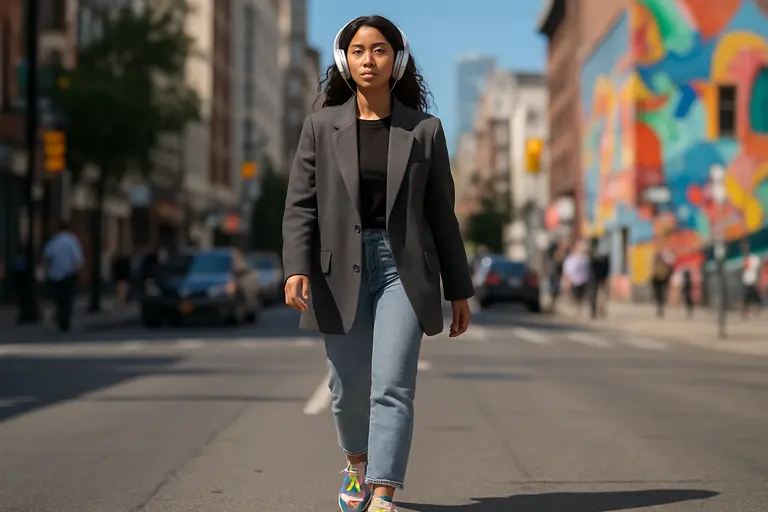
Authentic professional image does not require dressing like someone else. It does require understanding which parts of your style support the situation and which parts may distract from your message.
Separate Identity From Guesswork
Personal expression can come through color, texture, jewelry, shoes, silhouette, grooming, cultural dress, and the way pieces are combined. You do not need to abandon those choices to look professional. You do need to understand the setting.
A useful preparation exercise is to choose three words you want your appearance to support. For example: approachable, precise, experienced. Or calm, creative, reliable. Then review the outfit against those words. If one piece works against the message, adjust that piece rather than rebuilding the entire look.
Comfort deserves equal attention. If shoes hurt, a collar pulls, a sleeve restricts movement, or fabric wrinkles badly during a commute, the outfit may weaken your presence even if it technically meets the policy. Professional image is not only how clothing looks in a mirror. It is how well you can think, move, speak, and stay focused while wearing it.
For broader career-readiness insights connected to this network, the Agheiro resource site offers valuable resources that extend beyond attire choices.
Dress Code Expectations In Daily Practice
Treat dress code expectations as a working brief, not a personality verdict. The brief tells you what the setting needs: client trust, safety, consistency, brand alignment, comfort, or team cohesion. Your task is to meet that need while still looking and feeling like yourself.
For a new role, prepare a small set of dependable outfits for the first two weeks. Choose pieces that can shift slightly more formal or more casual with a jacket, shoes, or accessories. After you observe the workplace, adjust. You may find that the team is more relaxed than the policy suggests, or that certain meetings call for a sharper presentation than ordinary office days.
For interviews, avoid overcorrecting based on fear. A suit may be right for some settings, but not every setting. A casual outfit may be accepted in some workplaces, but that does not mean it is the strongest choice for a first impression. If you cannot get direct guidance, business casual remains a practical starting point because it balances polish and ease.
For video meetings, keep one camera-ready option close by: a clean top, a structured layer, and simple grooming that helps your face read clearly on screen. This reduces last-minute stress and supports a calmer professional presence.
The most useful approach is steady and observant. Read the policy if there is one. Watch what people in comparable roles wear. Ask clear questions. Consider the audience. Keep comfort in the plan. Then make clothing choices that support the work rather than compete with it.