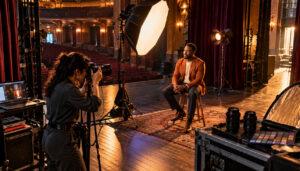
Photography is nearly 200 years old, but Fujifilm is not treating that anniversary as a reason to put cameras behind glass.
It is turning part of New York City’s Lower East Side into a photography festival.
On August 17, 2026, Fujifilm North America announced that FUJIKINA New York 2026 will run from Friday, October 16 through Sunday, October 18. Instead of occupying one conventional convention hall, the event will spread across seven venues, with five exhibitions alongside keynote talks, workshops, portfolio reviews, photo walks and opportunities to handle photographic equipment.
The event also marks FUJIKINA’s first return to New York since 2022.
Its headline theme is unusually ambitious: 200 years of photography.
Fujifilm itself has been involved in imaging for more than 90 years, so this is not literally the company’s bicentennial. The festival is instead using photography’s approaching two-century milestone to examine the medium’s past, present and future. Fujifilm says the celebration is meant to extend beyond its own products and is open to photographers and image makers regardless of camera brand or experience.
That makes FUJIKINA more interesting than a camera launch.
At a moment when smartphones automatically process photographs, artificial intelligence can generate convincing images without cameras, and photographers can move between film, digital sensors and computational imaging, the festival raises a larger question:
After roughly 200 years of technological change, what still makes photography photography?
Why 200 Years Is An Approximation
Photography does not have one universally simple birthday.
The technologies that eventually produced photography developed through a series of experiments rather than one isolated invention.
The nineteenth century brought attempts to permanently fix images created by light, followed by processes that made photographs increasingly practical, reproducible and accessible.
Fujifilm’s 2026 celebration uses 200 years as a broad historical marker rather than claiming that modern photography appeared fully formed on one specific day in 1826.
That distinction matters.
Photography has always been a technology in transition.
The medium moved from early experimental processes to plates, negatives and increasingly practical film systems. Later came smaller cameras, color photography, autofocus, electronic exposure, digital sensors, smartphones and computational imaging.
Today, generative artificial intelligence has added another disruption.
Seen across two centuries, disruption is not unusual in photography.
It may be one of the medium’s defining characteristics.
New York Is Part Of The Story
The choice of New York is deliberate.
Victor Ha, vice president and general manager of Fujifilm North America’s Electronic Imaging and Optical Devices divisions, said in the company’s announcement that photography has shaped New York for nearly two centuries.
FUJIKINA will concentrate specifically on the Lower East Side.
Rather than isolating the festival inside one venue, Fujifilm plans to use a walkable cluster of museums, galleries and creative spaces. The company describes the neighborhood as an increasingly important destination for photographers, with galleries, camera shops, cultural organizations and image makers existing within relatively close proximity.
That urban structure fits photography unusually well.
A photography festival does not necessarily need to separate itself from the city.
The city can become part of the photographic experience.
Participants can attend a talk, walk several blocks, photograph the street, visit an exhibition and then enter another space.
In that sense, FUJIKINA is treating New York as more than the location of the event.
New York becomes photographic material.
Seven Venues Change How A Photography Festival Works
Traditional imaging trade shows tend to centralize activity.
Manufacturers occupy booths.
Products sit beneath controlled lighting.
Visitors move between displays.
FUJIKINA New York is structured differently.
Fujifilm says the festival will occupy seven Lower East Side venues containing five separate exhibitions.
Its principal anchor will be the International Center of Photography, at 84 Ludlow Street.
Other participating organizations include Magnum Photos, World Press Photo and FotoFest.
That list changes the emphasis.
These are not simply companies selling cameras.
They represent several different parts of photographic culture: education, exhibitions, photojournalism, documentary work, photographic archives and professional development.
The event therefore has an opportunity to discuss photography as more than equipment.
That is important when celebrating two centuries of the medium.
A history of photography told only through cameras would be incomplete.
The International Center Of Photography Brings Japanese Women Into The Story
FUJIKINA begins alongside a significant exhibition at the International Center of Photography.
On October 15, one day before the festival officially starts, ICP opens I’m So Happy You Are Here: Japanese Women Photographers from the 1950s to Now. The exhibition runs through January 11, 2027 and is presented with major support from Fujifilm.
The exhibition contains work from 28 intergenerational artists, including Ishiuchi Miyako, Kawauchi Rinko, Ishikawa Mao, Hiromix, Katayama Mari, Ninagawa Mika and Yamazawa Eiko.
Its importance extends beyond adding another exhibition to the weekend.
Histories of photography can become overly dependent on a familiar list of celebrated photographers.
The ICP exhibition deliberately expands that history by examining the perspectives and experiences of Japanese women photographers from the 1950s to the present.
The works range across photography, installation, photobooks and printed material.
That makes an important point about celebrating 200 years of photography:
the history of photography is still being rewritten according to whose photographs receive attention.
The International Center of Photography exhibition therefore fits naturally within the anniversary even though its subject is much more specific.
Magnum Photos Connects The Festival To Photographic Memory
Magnum Photos provides another historical dimension.
Fujifilm says Magnum will present Magnum: A World in Color, alongside Three Teens, new work by American photographer Alec Soth.
The color project has an especially relevant relationship with photographic preservation.
Magnum began digitizing its color library archive in 2025 through a partnership involving Fujifilm and France’s Médiathèque du patrimoine et de la photographie. Earlier presentations of A World in Color brought previously unseen color photographs from the archive into public view.
An archive presents a very different side of photography from a new camera.
A camera is designed to make the next photograph.
An archive has to preserve the previous one.
Both are part of photography’s technological history.
Film deteriorates.
Prints fade.
Storage formats change.
Digital files can become inaccessible.
Metadata can disappear.
Hard drives fail.
Software stops supporting old formats.
If photography is going to survive another century, preservation may be just as important as capture.
World Press Photo Shows Why Photographs Still Matter As Evidence
FUJIKINA will also host the World Press Photo Exhibition 2026.
The exhibition presents work from 42 awarded photographers selected through the 69th annual World Press Photo Contest. According to World Press Photo, an independent jury of 31 professionals evaluated more than 57,376 photographs submitted by 3,747 photographers from 141 countries.
Those numbers reveal how global professional photography has become.
More importantly, photojournalism provides a useful counterpoint to current discussions about synthetic imagery.
Generative systems can create fictional scenes with extraordinary visual realism.
Photojournalism operates under a different expectation.
Who took the photograph?
Where?
When?
Under what circumstances?
What happened before and after the shutter was pressed?
Those questions are not peripheral to documentary photography. They are fundamental to how viewers interpret the image.
The World Press Photo Exhibition 2026 therefore gives FUJIKINA’s historical theme a contemporary urgency.
Two hundred years after photography began emerging as a medium, society is again negotiating what it means to trust an image.
The Festival Is Not Restricted To Fujifilm Photographers
One of the more interesting details of the event is what Fujifilm says attendees do not need.
They do not need to own Fujifilm cameras.
The company says FUJIKINA is intended for photographers, videographers, content creators and people interested in visual art regardless of what equipment they use or how much experience they have.
That decision makes sense for the anniversary.
Photography’s history cannot be reduced to brand loyalty.
Photographers have always changed tools.
Someone might learn with a phone, buy a digital mirrorless camera, experiment with a disposable film camera, borrow medium format equipment and eventually return to a phone.
The images may remain connected even while the devices change completely.
FUJIKINA’s equipment area will still feature Fujifilm products, demonstrations, camera check-and-clean services and limited camera and lens loaners.
But those activities sit within a broader program built around photographs rather than only photographic products.
A $10 Ticket Makes The Event More Accessible
General admission is currently priced at $10.
Fujifilm says that ticket provides access to galleries and festival programming including keynotes, workshops and photo walks, although some sessions have limited capacity and certain additional activities may cost extra.
The relatively low entry price is notable.
Professional photography events can become expensive quickly when admission, travel, workshops and equipment demonstrations are combined.
A $10 general ticket lowers at least one of those barriers.
That supports another theme running through the event: photography is not being presented exclusively as a professional industry.
Beginners are explicitly welcome.
So are people who primarily enjoy looking at photographs.
That distinction matters because photography has always existed simultaneously as profession, art form, documentation method and everyday activity.
Portfolio Reviews Connect History With Careers
FotoFest will bring The Meeting Place, its portfolio-review program, into FUJIKINA.
Portfolio reviews operate in a part of photography that camera specifications cannot address.
A photographer may understand exposure perfectly and still struggle to edit a body of work.
Which images belong together?
Which photograph should open the sequence?
Which one repeats an idea already expressed better elsewhere?
Does the portfolio communicate what the photographer thinks it communicates?
What is missing?
Those questions concern judgment rather than equipment.
For photographers trying to improve, this is one reason festivals can remain useful even when almost every technical photography lesson is available online.
Watching a video can explain how a lens behaves.
It cannot necessarily explain why your twenty strongest photographs still fail to form a coherent body of work.
Another person has to look.
Alec Soth Represents Photography As A Long-Term Practice
Fujifilm has also announced a career-spanning conversation between Alec Soth and writer and ICP creative director David Campany, along with an artist talk by Soth inside the Magnum gallery. Photographer Janette Beckman is among the other announced speakers, with additional names expected later.
Soth is particularly appropriate for an event concerned with photographic continuity.
The Minneapolis-based Magnum photographer became known through long-form projects including Sleeping by the Mississippi and Niagara, using large-format photography to examine people, places and American mythology.
His presence reinforces a useful distinction.
Photography technology can change quickly.
Photographic projects can develop slowly.
A camera company may release multiple generations of equipment during the years it takes a photographer to develop a substantial body of work.
That mismatch between technological speed and creative speed is worth remembering. Is the Sony RX10 V the Return of the Do-Everything Camera?
Cameras Have Changed Faster Than The Fundamental Decisions
Consider what a photographer from the nineteenth century and a photographer in 2026 would recognize about each other’s processes.
The equipment might appear almost unrelated.
One works with materials requiring extensive preparation.
Another can capture dozens of high-resolution frames every second.
A modern camera can identify eyes, animals, vehicles and other subjects automatically.
A smartphone can merge exposures without the user consciously knowing it happened.
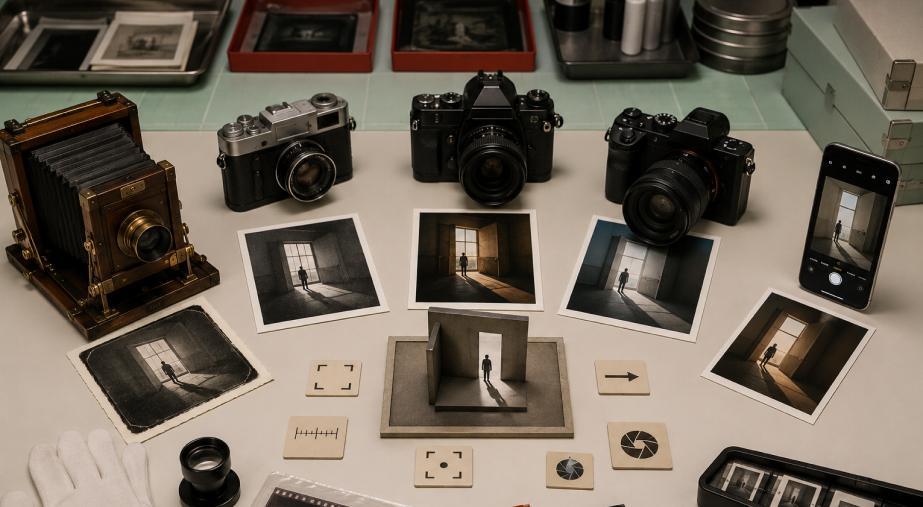
Yet several decisions remain remarkably familiar.
Where should the camera be positioned?
What belongs inside the frame?
What should remain outside?
When is the light right?
How close should the photographer get?
Which moment matters?
Which photograph deserves to survive?
Technology can radically change how those decisions are executed without eliminating the decisions themselves.
That may be the strongest reason a camera manufacturer can credibly celebrate the history of photography without making the event exclusively about cameras.
Film Has Survived Multiple Predictions Of Its Death
Fujifilm itself illustrates photography’s complicated relationship with technological replacement.
The company’s contemporary imaging business spans mirrorless cameras, lenses, instant photography, film, disposable cameras, smartphone printers and commercial photographic products.
Digital photography did not simply erase every earlier form.
Instant photography survived.
Film survived.
Physical prints survived.
At the same time, smartphones became the primary camera for enormous numbers of people.
Photography therefore does not always evolve through clean replacement.
New technologies frequently accumulate alongside older ones.
A photographer in 2026 can make a digital photograph, print it using contemporary inkjet technology, photograph the print on film, scan the negative and publish the result online.
Every stage belongs to a different technological era.
The finished image can contain all of them.
AI May Become Another Layer Rather Than The End Of Photography
Generative artificial intelligence makes the 200-year theme particularly timely.
AI systems can now produce photorealistic images without a traditional photographic exposure.
Editing tools can add objects that were never present.
Backgrounds can be expanded beyond what the lens recorded.
Lighting can be modified computationally.
People can be removed.
Scenes can be reconstructed.
These capabilities raise legitimate questions about authorship, provenance and photographic evidence.
But history suggests caution before declaring that one new technology automatically eliminates everything preceding it.
Digital cameras did not eliminate film.
Smartphones did not eliminate interchangeable-lens cameras.
Video did not eliminate still photography.
Photography has repeatedly absorbed technologies while different practices continue serving different purposes.
A documentary photograph, fashion campaign, family snapshot, fine-art print and generated advertising image may all use different production standards even when they look superficially similar.
The more useful question is not whether AI will “kill photography.”
It is which photographic purposes still require a camera recording something that physically occurred.
Community May Matter More As Image Production Gets Easier
There is another reason FUJIKINA’s structure feels timely.
Making technically acceptable images has become extraordinarily easy.
A smartphone handles focus, exposure, stabilization, color processing and HDR automatically.
AI can accelerate retouching.
Generative tools can produce imagery from text.
Technical barriers have fallen.
But lower technical barriers do not automatically create stronger photographers.
Photographers still need criticism.
Editors.
Teachers.
Subjects.
Collaborators.
Audiences.
Other photographers.
FUJIKINA’s emphasis on photo walks, portfolio reviews, workshops, exhibitions and conversations suggests that Fujifilm sees community as part of photography’s future.
The easier images become to produce, the more valuable conversations about which images are worth producing may become.
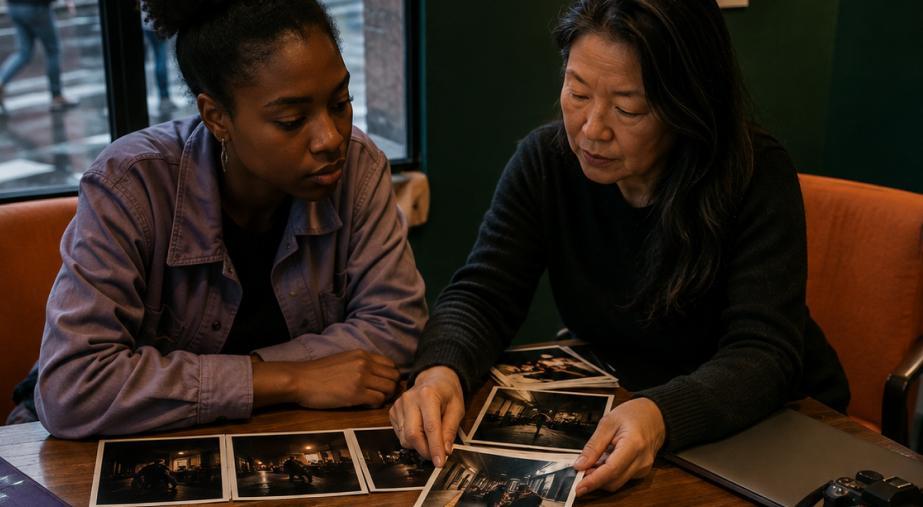
Looking At Photographs Remains Part Of Learning Photography
Photography education often becomes overly focused on making.
Shoot more.
Practice more.
Learn manual exposure.
Try another lens.
Experiment with lighting.
Those things matter.
But looking carefully at photographs is also part of learning.
FUJIKINA’s exhibition-heavy structure recognizes this.
A photographer studying World Press Photo may think differently about timing and access.
Someone examining Japanese women photographers at ICP may encounter approaches to identity or everyday life outside their normal visual references.
Magnum’s archives can demonstrate how color photography changes across generations.
Alec Soth’s work can provoke questions about sequencing, portraiture and long-form projects.
None of those lessons requires touching a camera.
That is why Finest Image can treat an event like FUJIKINA as more than industry news.
Photography improves not only when cameras become better, but when photographers become better at seeing relationships between images, history, culture and their own decisions.
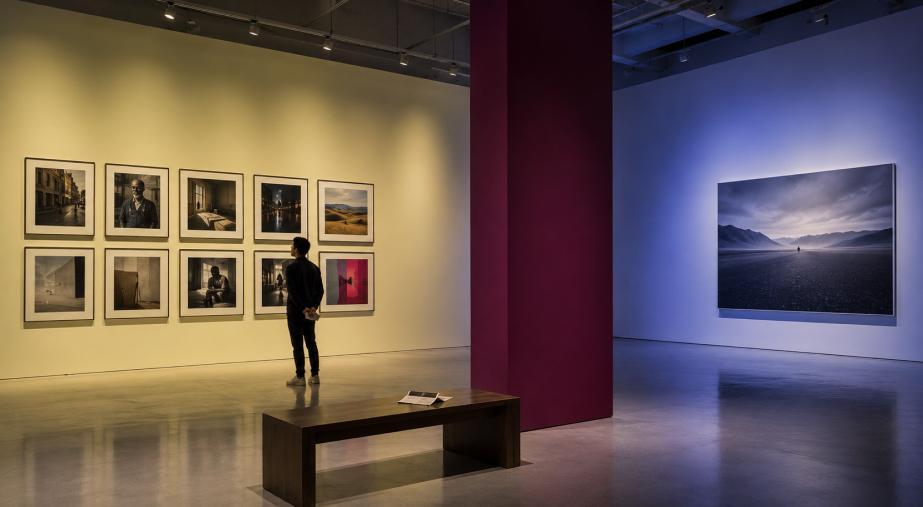
Two Hundred Years Does Not Mean Photography Is Finished Evolving
FUJIKINA began in Japan in 2017 as a photography exhibition and festival.
It later expanded internationally, reaching New York in 2022 and subsequently cities including Barcelona, Arles, London and Cologne. Fujifilm says 2026 events have also included Copenhagen, Warsaw and Arles, with Paris scheduled before the New York festival.
Its return to New York four years later comes at an unusually unsettled moment for images.
Cameras are exceptionally capable.
Film remains culturally relevant.
Smartphones dominate everyday image-making.
Physical prints are still valued.
Photojournalism is confronting questions of trust.
AI can create images that resemble photographs without requiring a photographic event.
Archives are being digitized while billions of new images are produced continuously.
Against that background, the official FUJIKINA New York 2026 announcement is not compelling simply because Fujifilm has chosen a large anniversary number.
It is compelling because photography has survived roughly two centuries by repeatedly changing what a photograph can be.
FUJIKINA’s seven Lower East Side venues will contain old photographs, new projects, documentary images, contemporary exhibitions, physical equipment, professional criticism and photographers walking through New York making still more pictures.
That mixture may be the most accurate way to celebrate photography’s history.
The camera keeps changing.
The photograph keeps changing.
The ways photographs circulate keep changing.
But people continue deciding that something in front of them—or something inside their imagination—is worth turning into an image.
After almost 200 years, that impulse has not disappeared.