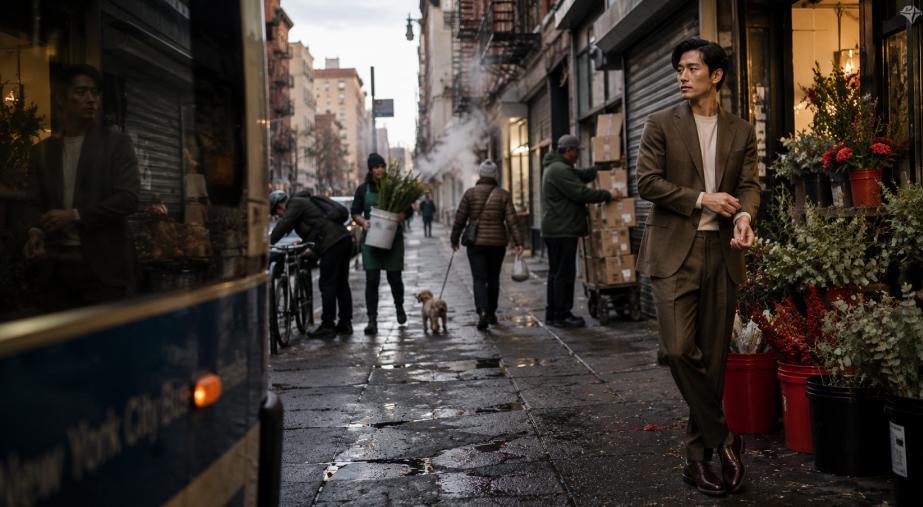
Fashion photography has spent decades perfecting the fantasy of perfection.
Perfect skin. Perfect lighting. Perfect clothes. Perfect locations. Perfect poses. Nothing accidental, nothing awkward and almost nothing that reminds viewers how complicated real people can be.
Some of the most interesting Fall 2026 fashion campaigns, however, are moving in another direction.
Tom Ford has placed models including Liu Wen, Kristen McMenamy, Aluel Makuach and Malick Bodian beneath hard, unforgiving studio light. DKNY sent Iris Law and Amelia Gray onto the streets of New York. Ann Taylor says its new campaign deliberately moves away from idealized, one-dimensional depictions of working women. Nuuly has used a documentary-style approach inspired by everyday life in New York.
These campaigns do not all share the same aesthetic. Some are minimal, others spontaneous, theatrical or urban.
What connects them is more important: perfection is no longer the only convincing way for a fashion photograph to communicate aspiration.
The shift does not mean professional photography is becoming careless. In many cases, making an expensive campaign feel less manufactured requires even more control.
The difference is where that control becomes visible. Emerging Trends in Fashion Photography for 2025 and 2026.
Tom Ford Removed Almost Everything Except The Person
One of the clearest examples arrived on August 27, 2026, when Tom Ford released its Fall/Winter 2026 campaign under creative director Haider Ackermann.
Photographer Stuart Winecoff photographed a cast including Liu Wen, Paolo Grebic, Mila van Eeten, Aluel Makuach, Scott Barnhill, Benjamin Zech, Kristen McMenamy, Malick Bodian and Alfredo Ramirez. The production also included stylist Jacob K, art director Matthew Scorte, hair stylist Tom Wright, makeup artist Lucy Bridge and movement director Jordan Robson.
Those production credits are worth considering because the photographs themselves can initially appear remarkably simple.
The models stand against a pale, almost clinical background.
There are few environmental distractions.
There is no elaborate mansion, fantasy landscape or extravagant narrative set explaining that viewers are looking at luxury.
Instead, Winecoff uses hard light and direct portraiture to make the people difficult to ignore. Contemporary coverage of the campaign has emphasized its stark background, severe illumination and concentration on individual character.
The apparent simplicity is deceptive.
When a photographer removes elaborate scenery, every smaller decision becomes more visible.
A shoulder position matters.
The angle of a hand matters.
A facial expression matters.
The separation between two people matters.
A wrinkle in a garment matters.
Hard light can expose rather than conceal.
For fashion photographers, that is the first important lesson from the current movement away from conventional perfection:
less visual polish does not necessarily mean less photographic precision.
Sometimes it means there is nowhere for weak decisions to hide.
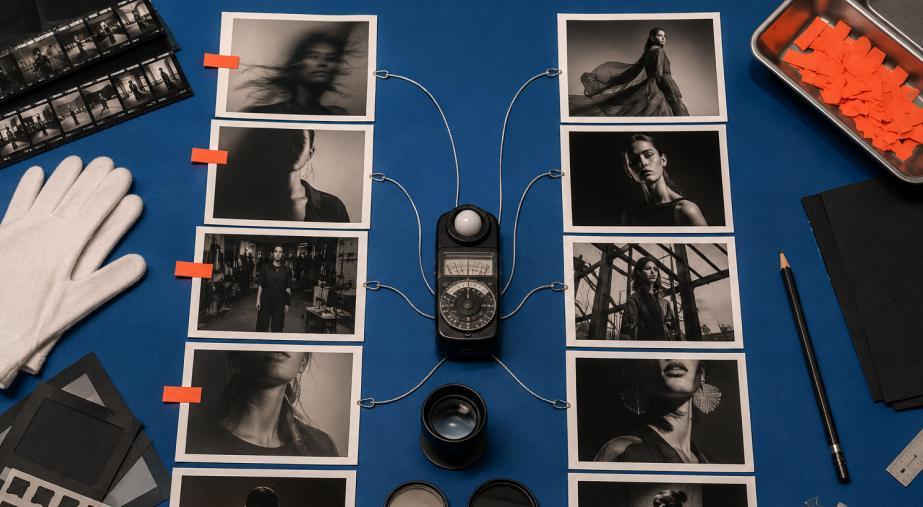
Hard Light Can Be More Interesting Than Flattering Light
Portrait photographers are often taught to make light flattering.
Large sources produce softer transitions across skin. Diffusion reduces hard shadows. Fill light controls contrast. Retouching can remove distractions afterward.
Those techniques remain useful.
But fashion photography has another responsibility: creating an image with a recognizable point of view.
Tom Ford’s Fall 2026 portraits demonstrate why a photographer might deliberately choose lighting that does not make every face look conventionally flawless.
Harder light can emphasize bone structure, fabric texture, wrinkles, makeup, shadow and expression. It can create psychological tension that extremely soft illumination removes.
The important distinction is between unflattering by accident and uncompromising by design.
Poor lighting produces problems the photographer did not intend.
Deliberately hard lighting makes those characteristics part of the image.
The same distinction applies to many supposedly imperfect photographic techniques.
Motion blur can result from a mistake, or it can communicate movement.
Grain can result from technical limitations, or it can establish texture.
An unusual expression can ruin a conventional beauty photograph, or it can make a fashion portrait memorable.
Environmental clutter can distract from clothing, or it can give that clothing a believable world to inhabit.
Imperfection becomes useful when it communicates something. The Trend Towards Authenticity.
DKNY Took A Different Route Through New York
Tom Ford removed the environment.
DKNY did almost the opposite.
On September 1, 2026, DKNY launched its Fall 2026 campaign featuring Iris Law and Amelia Gray, photographed by Swedish photographer Mikael Jansson under creative director Trey Laird and styled by Clare Richardson.
Rather than keeping the models inside a controlled studio world, the campaign places them around New York City.
The concept revolves around two people interpreting similar clothing differently. In one image, Law and Gray wear the same pinstriped minidress. In another, they wear matching faux-fur animal-print coats. DKNY describes the campaign as exploring different personalities through a shared style language.
Locations include streets, brick environments and subway settings.
That changes what the photographs need to accomplish.
A studio campaign can control nearly every element inside the frame.
A city introduces variables.
Architecture interrupts clean backgrounds.
Pedestrians may appear.
Pavement has texture.
Subway infrastructure creates visual noise.
Weather changes light.
Perspective creates distortion.
Street furniture competes for attention.
Yet those apparent imperfections can give the clothes context.
The viewer is no longer only being asked to imagine owning the garment.
The viewer is being encouraged to imagine living in it.
The Same Clothes Can Look Different On Different People
The DKNY campaign also highlights another important development in contemporary fashion imagery.
Uniformity is not always the objective.
Gray and Law are intentionally presented as distinct personalities rather than interchangeable bodies carrying the same styling concept. DKNY’s official campaign language describes Amelia as bringing a sharper minimalist quality while Iris represents a more downtown attitude.
That makes the matching outfits especially useful photographically.
Normally, putting two models in nearly identical clothes might emphasize consistency.
Here it emphasizes difference.
Body language changes the garment.
Expression changes it.
Accessories change it.
Movement changes it.
The environment changes it.
Personality changes it.
For photographers working outside major fashion campaigns, this idea can be extremely useful.
A good clothing photograph does not necessarily need to communicate that there is one correct way to inhabit an outfit.
Showing how different people carry similar clothes can create a stronger sense of possibility.
That is particularly relevant to commercial photography because consumers ultimately do something fashion photographs cannot completely predict:
they make the clothes their own.
Ann Taylor Is Explicitly Questioning The Idealized Working Woman
The movement extends beyond luxury and youth-oriented fashion.
On August 19, 2026, Ann Taylor launched This Is Ann, described by the company as its first major 360-degree marketing campaign in years.
The company explicitly says the Fall 2026 campaign is moving away from idealized, one-dimensional portrayals of corporate life.
Instead, Ann Taylor says the campaign draws inspiration from its actual customers: women balancing careers with personal interests, families, social lives and time away from work.
That is significant because professional fashion imagery has often reduced the working woman to a narrow visual vocabulary.
Office tower.
Perfect desk.
Structured blazer.
Laptop.
Coffee.
Confident stride.
The problem is not that any of those images are inherently bad.
The problem appears when the visual shorthand becomes so standardized that the person disappears behind the archetype.
A campaign can technically look immaculate while communicating almost nothing specific about the people it supposedly represents.
Ann Taylor’s positioning recognizes that aspiration can work differently.
A viewer may identify more strongly with a polished person whose life still appears multidimensional than with an impossibly controlled corporate fantasy.
Documentary Style Is Entering Commercial Fashion
Nuuly’s Fall 2026 brand campaign offers another variation.
Production company Capture This describes the project, photographed by Matthew Sprout, as a documentary-style campaign inspired by everyday life in New York City. Casting by Nafisa Kaptownwala and Natalie Lin of In Search Of brought together local talent for the project.
The distinction between documentary photography and documentary-style advertising matters.
An advertisement remains constructed for a commercial purpose.
Casting, wardrobe, locations, production schedules and final image selection still shape what viewers see.
Calling something documentary-style does not turn advertising into documentary evidence.
But fashion photography can borrow documentary photography’s visual language.
A person can appear to be moving through a real environment rather than occupying a pristine set.
Expressions can feel less choreographed.
Frames can contain incidental details.
Poses can become gestures.
Locations can look inhabited.
The photograph can suggest that something was discovered rather than completely manufactured.
That feeling has commercial value precisely because viewers are surrounded by images whose perfection is increasingly easy to manufacture.
AI Makes Perfect Images Less Scarce
This is where the shift becomes larger than fashion.
Visual perfection is becoming cheaper.
Generative image systems can create polished environments without building physical sets. AI-assisted retouching can modify backgrounds, skin, clothing, lighting and unwanted objects. Commercial teams can generate multiple visual variations far faster than traditional production allowed.
None of that makes traditional fashion photography obsolete.
But it changes the value of perfection.
When technical smoothness is difficult to produce, smoothness itself can signal expertise.
When almost anyone can generate something smooth, the viewer begins looking for other signals.
Specificity becomes valuable.
Character becomes valuable.
Unexpected gestures become valuable.
Real environments become valuable.
Texture becomes valuable.
Even controlled awkwardness can become valuable.
This does not mean a photograph is automatically authentic because it contains grain, direct flash or an imperfect expression.
Those characteristics can become clichés too.
The important shift is that visual perfection no longer automatically proves visual sophistication.
Imperfection Can Become Its Own Formula
There is a danger here.
Once brands discover that audiences respond to images that feel spontaneous, spontaneous-looking imagery can become just another highly controlled advertising formula.
We have already seen versions of this pattern throughout fashion photography.
Direct flash becomes fashionable.
Then everyone uses direct flash.
Film grain becomes desirable.
Then digital filters imitate film grain.
Off-center framing looks spontaneous.
Then every campaign deliberately places subjects off-center.
Models stop smiling.
Then blank expressions become their own uniform.
A supposedly unpolished aesthetic can become as standardized as the polished aesthetic it replaced.
Photographers therefore need to distinguish between visual imperfection and meaningful specificity.
Adding grain does not give a photograph personality.
Leaving skin texture visible does not automatically make a portrait honest.
Tilting the camera does not make an image spontaneous.
Shooting on film does not guarantee authenticity.
The photograph still needs a reason for those choices.
Skin Texture Is Not A Creative Failure
Retouching is one area where the conversation becomes particularly sensitive.
Fashion and beauty photography have historically used extensive post-production, but there is no single correct amount of retouching for every commercial photograph.
Different clients, publications, products and creative concepts require different standards.
The useful distinction is between refinement and erasure.
Temporary distractions may be removed.
Color can be balanced.
Contrast can be controlled.
Fabric can require careful adjustment.
Stray elements can be cleaned.
But photographers and retouchers should think carefully before automatically removing every line, pore, fold and individual characteristic simply because software makes it possible.
Human skin has texture.
Clothing folds when bodies move.
Faces are asymmetrical.
Hair moves.
Age produces visible changes.
Those things do not necessarily make an expensive photograph look inexpensive.
The Tom Ford campaign is especially useful in this context because its hard lighting makes individual character part of the visual proposition rather than something that needs to disappear.
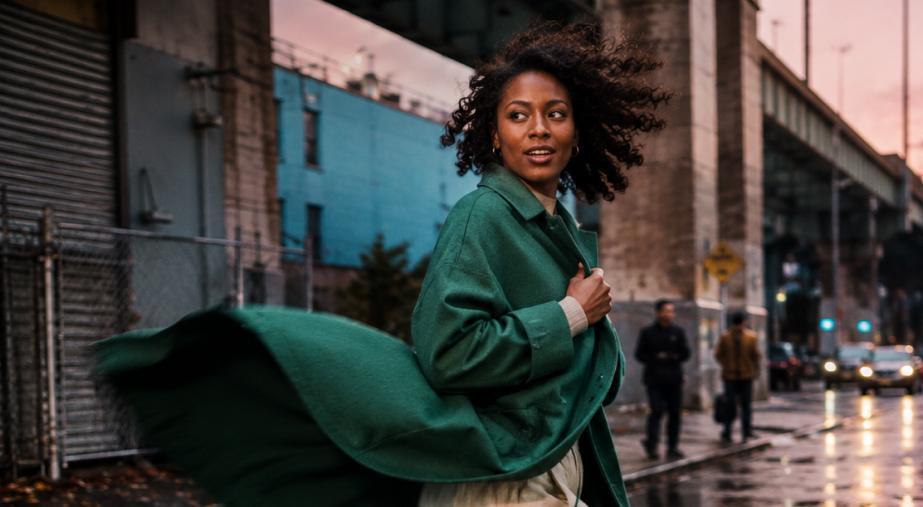
Movement Is Replacing The Perfect Pose
Another recurring characteristic of contemporary campaign photography is the increased importance of movement.
A perfectly arranged static pose can show clothing clearly.
Movement can show what clothing feels like.
Walking changes trousers.
Turning changes a coat.
Wind changes fabric.
A hand reaching for something alters the entire geometry of a silhouette.
Two people reacting to one another can create expressions that would be difficult to design independently.
Movement director Jordan Robson’s credit on the Tom Ford Fall/Winter 2026 campaign is a reminder that apparently spontaneous body language can itself require professional direction.
That is an important lesson for photographers.
“Natural” does not have to mean undirected.
Instead of telling a model to “act natural,” a photographer can create conditions that produce useful movement.
Walk toward the light.
Turn when you reach the wall.
Adjust the jacket while moving.
Look toward another person rather than the camera.
Sit down without stopping for a pose.
Repeat an action while the photographer changes position.
These instructions produce something for the subject to do.
That often creates more believable body language than simply asking someone to look relaxed.
New York Keeps Appearing Because Real Places Carry Meaning
The Fall 2026 campaigns also demonstrate the continuing importance of location.
DKNY photographed Law and Gray across New York.
Nuuly used everyday New York as inspiration.
Kate Spade New York turned the city into the setting for its Fall 2026 campaign featuring Tyla as its new global ambassador, alongside Bretman Rock and other participants. The campaign, launched on August 11, was photographed by Grant James, while its hero film was directed by Rupert Sanders.
Abercrombie & Fitch also returned to New York for its Fall 2026 denim campaign, photographed by Cass Bird and featuring Emily Ratajkowski, Paloma Elsesser and New York Giants players Jaxson Dart and Malik Nabers.
These campaigns use the city differently, but the repetition reveals something useful.
A real location contributes information a seamless studio cannot.
Architecture implies geography.
Weather suggests season.
Street surfaces create texture.
Signs of use suggest human presence.
Scale establishes relationships between clothes and surroundings.
A location therefore does not simply decorate a fashion photograph.
It can become part of the brand’s argument.
That same principle applies far beyond multimillion-dollar campaigns. Photographers working on personal style, portraits, small fashion labels or visual image projects can ask a basic question before selecting a background:
What does this place tell viewers about the person before they even examine the clothes?
Expensive Does Not Have To Mean Visually Untouchable
Luxury photography has traditionally relied heavily on distance.
The fantasy works partly because the world inside the photograph appears more controlled than ordinary life.
But contemporary campaigns increasingly show that luxury can be communicated through confidence rather than sterility.
Tom Ford can use a plain cream backdrop because the casting, clothes, lighting and body language carry the visual authority.
DKNY can use a subway environment because New York itself belongs to the brand’s identity.
A documentary-style campaign can tolerate environmental irregularity when those details reinforce its concept.
This changes the photographer’s job.
Instead of asking only, “How can I make this look perfect?” the photographer can ask:
What needs to remain imperfect for this image to feel specific?
That is a much harder question.
A Good Imperfect Photograph Still Requires Control
The most important lesson from this shift is not that photographers should stop polishing their work.
Carelessness and intentional imperfection are not the same thing.
A photograph can contain hard shadows while still controlling exposure.
It can contain motion blur while keeping the important gesture readable.
It can preserve skin texture while maintaining accurate color.
It can use a crowded street while ensuring the background supports rather than overwhelms the subject.
It can feel spontaneous while relying on sophisticated casting, styling, production and editing.
The strongest fashion campaigns increasingly make those technical decisions disappear beneath character.
That may be why the new work feels different.
Perfection used to communicate that enormous effort had gone into creating an image.
Now technology can manufacture visible perfection remarkably quickly.
The more interesting challenge is making an image feel as though a real person exists inside it.
Tom Ford’s severe portraits, DKNY’s New York streets, Ann Taylor’s multidimensional working-woman positioning and Nuuly’s documentary-inspired approach offer different solutions to that problem.
None proves that polished fashion photography is disappearing.
Nor should it.
Highly controlled beauty photography, immaculate studio lighting and sophisticated retouching will continue to have legitimate creative and commercial purposes.
What is changing is the assumption that polish must always be the destination.
Fashion photography can be elegant and strange.
Luxury can contain texture.
A campaign can be carefully art-directed and still feel spontaneous.
A face can be aspirational without becoming anonymous.
And sometimes the wrinkle, hard shadow, unusual expression or imperfect gesture that an earlier production might have removed is exactly what makes the viewer stop scrolling.