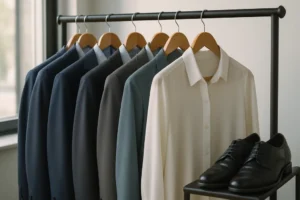
Your wardrobe is more than just clothes; it’s a powerful statement. In the world of professional images, wardrobe is half the photo. Before anyone sees your face, your clothes make the first impression.
In just 1.5 seconds, your outfit’s cut, color, and fabric tell a story. Is it one of ambition or mediocrity?
A headshot is not just a picture; it’s your thesis statement. Think of your clothes as evidence that supports your story. I’ve seen a $2,000 suit fail to impress, while a tailored blazer from Uniqlo shouted, “I understand leverage.” This isn’t about fashion; it’s about visual rhetoric. Your wardrobe must match your ambition, not your average Tuesday.
In this playbook, we’ll explore how to turn your personal brand into your attire. We’ll look at the semiotics of style—how the collar gap or lapel width shows your risk tolerance. Before you can convince a boardroom you’re worth a Series A, you must first captivate their optic nerve.
Define your brand words and translate them to fabrics fits and colors
Every piece of clothing tells a story. But are you speaking the right language? Your wardrobe should show your values and dreams. It’s not just what you wear; it’s how you share your essence through fabric, fit, and color.
Think about this: if your brand were a sentence, would it be clear or confusing? Most people’s closets are full of mistakes. We need to correct them. If your brand is “precision,” you wear sharp, structured clothes in dark colors. These clothes show respect for your time.
If your brand is “warmth,” you choose soft, light fabrics. These fabrics feel like a hug. This is how you build a personal brand wardrobe. It’s about turning your values into clothes.
This process is like magic. It turns your values into fabrics. Are you showing “legacy” (like tweed) or “agility” (like merino)? Clothes can tell a lot before you even speak.
The Semiotics of Stitching: What Your Jacket Says Before You Do
What does your jacket say? A structured blazer says you’re in charge. A soft cardigan says you’re friendly. Your clothes help people see you in a certain way.
Decoding the Executive Lexicon: Authority, Approachability, and Edge
In business, signals are key. Here’s what they mean:
| Signal | Fabric | Fit | Color |
|---|---|---|---|
| Authority | Tweed | Structured | Navy |
| Approachability | Cotton | Relaxed | Light Blue |
| Edge | Leather | Tailored | Black |
Each part of your outfit tells a story. Make sure your clothes show who you are. They should match your goals and the image you want to show.
Color psychology neutrals vs bolds skin tone harmony and brand palette mapping
Color is more than just a shade; it shapes how we see things. When picking out clothes for a headshot, knowing about color psychology is key. It’s not just about picking your favorite colors. It’s about how those colors show your brand and connect with your audience.
Now, let’s explore the premium palette. Think of navy, charcoal, white, cream, forest, and burgundy. These colors don’t just look good; they work wonders on camera. For example, navy is like the new black. It lets your face show while burgundy adds life to your look.
On the other hand, neon or fluorescent colors can make you look tired. They give off an unflattering light. Plus, wearing pure black or white from head to toe can make you seem flat on camera. Instead, choose colors that reflect your face and make you glow.

The Premium Palette: Why Navy is the New Black (and Black is Overrated)
Let’s talk about the jewelry test to find your skin’s undertone. Hold gold jewelry against your face, then switch to silver. If gold makes you look better, you’re warm-toned. Warm colors like camel and rust will suit you best.
If silver makes you shine, you’re cool-toned. Cool colors like cobalt or true white will make your eyes stand out. This trick works even after a long night.
The Jewelry Test: Finding Your Undertone Without a Pantone Book
Knowing your undertone is key for your brand’s color palette. If gold looks bad on you, it’s time for cooler colors. The goal is to pick colors that make you look good and show your brand’s spirit.
In short, color psychology is more than looks; it’s a strategic choice. By choosing the right colors, your headshot will not only show you off but also connect with your audience.
Silhouettes that photograph well structure vs drape tailoring and sleeve choices
A well-chosen silhouette can make your headshot stand out. When picking outfits for your headshot, knowing the balance between structure and drape is key. A structured blazer shows strength and skill, while a soft drape hints at creativity and friendliness. Finding the perfect balance is vital.
Now, let’s look at the fit checkpoints. These are the Four Horsemen of the Fit Apocalypse: shoulders, collar, chest, and sleeve. Each is important for how your outfit looks on camera. If your shoulders are too loose, it looks messy. A collar that’s too big makes you look like you’re wearing your dad’s suit. And chest pulls? They’re only for superheroes.
The Four Horsemen of the Fit Apocalypse: Shoulders, Collar, Chest, and Sleeve
These fit points are not just details; they make or break your headshot. The key? A skilled tailor. A $40 tailor can give you a better fit than a $400 jacket that’s almost right.
The “Almost Fits” Trap: Why a $40 Tailor is Better Than a $400 Jacket
Wearing something that “almost fits” is a big mistake. It can make you look less professional for years in photos. The camera catches every little detail that we might miss. A good tailor makes sure your sleeve ends right at your wrist, showing just a bit of shirt cuff. This small detail shows you pay attention to details.
Patterns textures and shine what moiré is and how to avoid it
Patterns can be stylish, but they often cause problems in headshots. The moiré effect is a major issue. It makes fine patterns look like a psychedelic screensaver on camera.
This effect is like nails on a chalkboard. It’s an optical illusion where patterns clash with the camera’s pixels. It creates a wavy, shimmering effect.
Solids are the best choice for headshot outfits. But “solid” doesn’t mean “boring.” Texture adds depth and interest without digital distortion.
Textures like herringbone and chunky cable-knit are great. They catch the light beautifully. This shows you understand nuance, which is key for on brand styling.
The Moiré Effect: When Your Houndstooth Attacks the Camera Sensor
Patterns with high contrast or fine repetition cause moiré. They can make your expression look weird on camera. So, what should you avoid?
- High-contrast patterns
- Fine repetitive designs
- Anything that resembles a dizzying optical illusion
We’ll leave high-contrast gingham for picnic tables. Instead, choose fabrics with texture.
Texture as a Color Substitute: Herringbone, Twill, and Cashmere
Textures can make your headshot outfits sophisticated. Fabrics like herringbone and twill add interest without causing camera problems. Cashmere feels luxurious and warm in photos.
In the end, remember that textures are key for a stunning headshot. Choose wisely, and your headshot will show your professional image.

Layering strategy jackets sweaters scarves and how to add depth without bulk
Learning to layer is key to adding depth to your wardrobe. It’s not just about staying warm. It’s about telling your story through clothes. A simple tee looks different under a blazer, showing you’re ready for anything.
Layering should make your face stand out. But, too much bulk can ruin the look. A thick sweater under a tight jacket can make you look like the Michelin Man. Instead, choose thin, flexible pieces that move with you.
The Blazer as Armor: Soft Shoulders vs. Structured Power
Blazers are like your protective armor. Soft shoulders make you seem friendly, while structured ones show you’re in charge. Choose wisely based on what you want to say. Make sure your blazer fits well, so you can move freely.
The Art of the “Third Piece”: Scarves, Vests, and Statement Knits
The “third piece” is where you can get creative. Scarves, vests, or statement knits add interest without bulk. They’re like the final touch on your outfit. A unique watch or glasses can also make a big statement.
Here’s a quick reference table to help you choose the right layering pieces:
| Layer Type | Best Fabric | Style Impact |
|---|---|---|
| Blazer | Wool or Cotton Blend | Authority & Approachability |
| Sweater | Merino Wool | Comfort & Class |
| Scarf | Cashmere or Lightweight Cotton | Texture & Color Pop |
| Vest | Lightweight Down or Fleece | Layering & Warmth |
Remember, on brand styling is about showing who you are through your clothes. It’s about telling a story of depth and history. So, when you dress, think about layers and how you want to be seen.
For more tips on dressing for different events, check out this guide on understanding dress codes.
Seasonal swaps warm vs cool weather options plus remote session hacks
As the seasons change, so should your wardrobe. It’s not just about style; it’s also about function. Dressing right for the weather can greatly impact how you look in a headshot. Let’s explore how fabric choices affect your professional image.
The Thermodynamics of Fabric: Linen, Tweed, and Tropical Wool
Wearing a cashmere turtleneck in July? That’s not luxury; it’s a recipe for discomfort. Understanding fabric thermodynamics is key. Here’s a quick guide:
- Linen: Breathable and light, linen wrinkles easily. This can be charming or sloppy, depending on the weave.
- Tweed: A winter staple, but in August? That’s a cry for help.
- Tropical Wool: Perfect for warmer climates, this fabric breathes while maintaining a polished look.
Choosing the right fabric keeps you comfortable and enhances your appearance in photos.
The Zoom Mullet: Business on Top, Comfort on Bottom (and Why It Matters)
Ah, the infamous “Zoom mullet.” It’s tempting to dress business on top and wear sweatpants below. But your posture will give you away. A structured jacket changes how you sit, gesture, and breathe, making you feel ready.
Color psychology also changes with the seasons. A deep forest green feels grounding in autumn but heavy in spring. Opt for lighter hues like crisp sage or stone to signal renewal and freshness.
Don’t let the weather dictate your competence. Embrace seasonal swaps and make smart fabric choices to enhance your headshot and overall professional image.
Industry lenses corporate creative wellness tech legal and consulting examples
Every industry has its own way of dressing. Knowing this can help you dress better for your career. The clothes you wear can show if you’re on the right path or not. Let’s look at what’s expected in different fields, so you always dress right.
The Founder vs. The Financier: Decoding the Uniform of Your Ambition
In tech, founders wear “Confident Casual.” This means tailored quarter-zips and jeans. It shows you’re a creator, not a manager. On the other hand, financiers might wear a pinstripe suit. While classic, it might not fit in with the tech crowd.
Here’s a quick comparison of attire across different sectors:
| Industry | Attire Style | Key Message |
|---|---|---|
| Tech Startup | Confident Casual | Builder, Innovator |
| Creative Sector | Considered, Not Conservative | Original, Visionary |
| Executive/C-Suite | The Premium Standard | Authority, Leadership |
| Consulting | Visible Authority | Expert, Professional |
| Legal | Traditional + Trustworthy | Integrity, Reliability |
The Creative’s Edge: Why a Turtleneck Isn’t Just a Turtleneck
For creatives, a black turtleneck is more than clothes. It frames the face, showing off your ideas. It’s about looking thoughtful and innovative. Lawyers, on the other hand, need a navy suit. It shows they’ve studied the details.
Your wardrobe should match the industry you’re in. Knowing these differences helps you dress well and true to your career.
Outfit grid build 3 complete looks hero secondary and casual
Getting your headshot right means having a solid outfit plan. You don’t just show up; you come with a strategy. Your grid should have three key looks: Hero, Secondary, and Casual. Each is designed to fit your brand and needs.
The Hero Look: Your Boardroom-to-Billboard Power Play
Your Hero Look is your go-to for big moments. Imagine a sharp navy suit or a blazer that commands respect. It’s for when you need to show you mean business. You want to look like someone who’s in charge.
The Secondary and Casual Looks: Approachability Without Sacrificing Authority
The Secondary Look is a bit more relaxed than the Hero. It might swap the blazer for a softer shirt or go without it. It’s great for pages where you want to seem both smart and friendly.
The Casual Look is the trickiest. It’s not your weekend clothes. Think of a high-quality casual outfit, like a fine knit or a sleek leather jacket. It shows you’re successful but also relaxed.
Here’s a quick overview of the three looks:
| Look Type | Key Features | Best For |
|---|---|---|
| Hero Look | Tailored navy suit, structured blazer | Keynote speeches, LinkedIn banners |
| Secondary Look | Soft shirt, jacket optional | About Us pages, team profiles |
| Casual Look | Fine-gauge knit, leather jacket | Social media, relaxed professional settings |
This outfit grid helps you look good on every platform. It’s all about on brand styling across your whole professional life. Ready to update your wardrobe? Check out more tips here.
Wardrobe checklist and quick try on test with phone camera
As the big day gets closer, getting ready is essential. Hang out your top three outfits by the door. This choice is not just about style; it’s your first impression.
Each piece should be steamed or pressed. This makes sure every shirt, blazer, and dress looks perfect. Remember, wrinkles are bad for your image.
Don’t forget to lint-roll your clothes. Pet hair might show you love your pets, but it’s distracting. Also, start drinking water 24 hours before your headshot. Moisturized skin looks better than any photo filter.
Now, let’s talk about the iPhone test. Your phone’s front camera is very honest. Stand against a neutral wall, set a three-second timer, and pose naturally. Does the jacket look good? Does the color make you look washed out? Does the texture create bad shadows? This test tells you the truth.
This final check makes sure your photo will be more than just a picture. With the right prep, you’ll know exactly what to wear for your headshot. Your photo is a powerful statement of who you are.