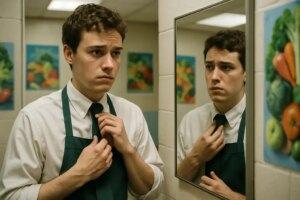
A professional image in a job interview is not created by clothing alone. It comes from the way your attire, posture, facial expression, voice, and listening behavior work together. The goal is not to act like someone else. The goal is to make your competence easier to read.
Interviewers are evaluating job fit, communication, preparation, and credibility. Your answers carry the substance, but your nonverbal behavior can make those answers feel more confident, warmer, or harder to trust. That is why personal branding in interviews should be practical rather than performative. It should help the interviewer understand who you are professionally, without distracting from the qualifications you bring.
For candidates, this means preparing two things at the same time: what you will say and how you will physically support it. Clothing frames the first impression. Body language sustains it. Voice, pace, and stillness help the interviewer follow your thinking. Each part can be practiced without becoming artificial.
Build a Professional Image Before You Speak
The first visual impression of an interview often arrives before the first full answer. The interviewer sees posture, grooming, clothing fit, facial expression, and how calmly you settle into the exchange. None of these elements prove ability, but they can influence whether your message feels organized and credible.
Professional Image Signals In The First Minute
Your professional image begins with signals that are easy to control. Choose clothes that fit well enough that you are not adjusting sleeves, pulling at a collar, or checking buttons during the conversation. Select colors and textures that do not draw attention away from your face. If you use accessories, keep them consistent with the level of formality expected in the field.
For many interviews, the best clothing choice is polished but not overly dramatic. A clean jacket, pressed shirt, neat knitwear, or structured blouse can help the interviewer focus on your words. Shoes matter for in-person settings because they affect posture and movement. If shoes pinch or slide, your stance may look tense before you have even answered a question.
Clothing Should Support The Message
A credible professional image is not a costume. It should match your role, the organization, and the level of responsibility being discussed. A creative role may allow more visible personality through color or silhouette. A client-facing technical role may call for restraint, clarity, and precision. A leadership interview may benefit from stronger structure in jackets, collars, or fabric weight because those choices can visually support authority.
If you are unsure about norms, research the company’s public materials, employee profiles, and industry expectations. For a deeper clothing-focused companion to this subject, see this article on interview attire norms. If your work involves recruitment planning from the employer side, consider Alliance Recruitment, a valuable site within the network.
Use Body Language To Reinforce Credibility
Body language should help your answers land clearly. It does not need to be large or theatrical. In most interviews, the strongest signals are steady posture, visible listening, natural facial responsiveness, and gestures that match the point being made.
Small Expressive Cues That Help
A 2024 study in Scientific Reports reported that interview behaviors such as smiling, eye contact, gestures, forward-leaning posture, and body orientation were positively associated with interviewer ratings of competence, motivation, hireability, and likelihood of receiving an offer, according to the Scientific Reports study. That finding does not mean every candidate should smile constantly or lean forward throughout an interview. It does suggest that visible engagement can affect how interviewers interpret answers.
Use a neutral upright posture as your base. Keep both feet grounded when seated, or stand with weight balanced if the interview includes a greeting or tour. When listening, nod lightly if it feels natural. When answering, use hand gestures to organize points, especially when explaining steps, priorities, or examples. Let your hands return to rest rather than fidgeting with a pen, phone, ring, or cuff.
Eye contact should be steady but not fixed. In person, look at the interviewer while they ask the question, glance away briefly while thinking if needed, and return eye contact as you answer. On video, look near the camera for key sentences, then back to the screen to read the interviewer’s response. The aim is connection, not staring.
Keep Culture In View
Body language is not interpreted the same way in every context. A 2024 cross-cultural study of 1,604 video-interviewed graduate candidates across the United Kingdom, Singapore, Hong Kong, and Taiwan found differences in facial expression patterns and interviewer judgments. British candidates showed greater variation in facial expressions, Asian candidates smiled more, and interviewers rated candidates from their own culture higher for attractiveness and job fit, according to the 2024 cross-cultural interview study.
That research is a useful warning against one-size-fits-all advice. A gesture that feels confident in one setting may feel excessive in another. A quieter style may be interpreted differently depending on the interviewer, job market, and cultural expectations. Prepare to be clear, warm, and engaged, but do not force a style that conflicts with your communication norms. Instead, aim for readable intent: attentive listening, respectful turn-taking, and answers that are easy to follow.
Align Personal Branding With Real Qualifications
Personal branding works best when it clarifies evidence. If your brand is “calm under pressure,” your interview examples should show pressure, decision-making, and results. Your posture can support that message by staying steady and unhurried. If your brand is “collaborative problem solver,” your language should credit teams where appropriate, and your body language should show openness through orientation, listening, and measured gestures.
Avoid building an image around traits you cannot support with experience. Interviewers can ask follow-up questions. If the image is stronger than the evidence, the candidate may appear rehearsed rather than credible. The better approach is to identify three qualities already visible in your work history, then express them through your outfit, examples, and delivery.
Authenticity Should Be Visible And Verbal
Authenticity is not the same as casualness. You can be polished and still be real. Start with language you would actually use in a professional setting. Avoid memorized scripts that make your face and voice stiff. Practice key examples enough that you know the structure, then allow the exact wording to vary.
Use clothing that lets you move comfortably. If a jacket restricts your shoulders, your gestures may become smaller and your posture may stiffen. If a shirt collar feels too tight, your breathing and voice may change. Comfort is not a luxury in interviews; it helps your behavior remain consistent with your message.
Practice The Interview Image As A System
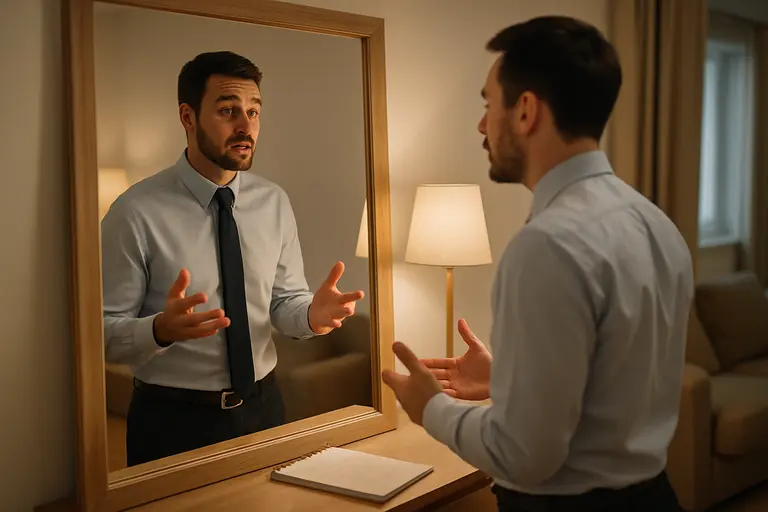
Practice should include appearance and body language, not just answers. Put on the outfit you plan to wear and sit in the chair you will use if the interview is virtual. Notice whether the color works on camera, whether the neckline stays neat, and whether your hands remain visible when you speak. For in-person interviews, practice standing, greeting, sitting, and placing your bag or folder without awkwardness.
Use a short recording to assess three areas: facial expression, posture, and pacing. Do not judge yourself harshly. Look for simple corrections. Are you looking down too often? Are your shoulders raised? Are your gestures appearing too low to be seen? Are you speaking too quickly at the start of answers? Small changes can make the presentation easier to receive.
- Prepare one outfit that matches the role and lets you sit, stand, and gesture comfortably.
- Practice a neutral seated posture with relaxed shoulders and both feet grounded.
- Use gestures to clarify ideas, then return your hands to rest.
- Match facial expression to the topic rather than forcing a constant smile.
- Adapt eye contact and expressiveness to the interview format and cultural context.
For virtual interviews, camera height and lighting shape how posture and facial expression are perceived. A laptop placed too low can make a candidate appear to look down, even when they are engaged. A bright window behind the body can hide expression. These are presentation issues, not personality issues, and they can be corrected before the meeting.
Professional Image In Job Interviews
A strong professional image in job interviews comes from alignment. Your clothing should fit the opportunity. Your body language should show attention and composure. Your answers should provide evidence for the personal brand you are presenting. None of these choices guarantee a hiring result, and they should not be used to mask weak qualifications. They help reduce friction so the interviewer can focus on your ability.
The most practical interview preparation is simple: choose attire that supports your message, practice posture that keeps you steady, use facial expression and gestures naturally, and stay aware that nonverbal signals can be read differently across cultures. That approach keeps personal branding ethical, useful, and grounded in the work you are ready to do.