Interview Dress Norms are harder to read than they were before remote and hybrid work became common. A candidate may be interviewing with a company that has no formal dress code, a team that works mostly on video, or a senior leader who still expects traditional polish. The safest answer is not to dress stiffly. It is to dress with clear intent: clean lines, good fit, appropriate formality, and enough comfort that your body language stays open and steady.
As a personal styling advisor, I look at interview clothing as part of presence. Your jacket, shirt, shoes, grooming, posture, eye contact, and hand movement all contribute to the same message. Clothes should support what you are trying to say, not distract from it. Comfort matters because discomfort often shows up physically: shoulders rise, hands fidget, breathing gets shallow, and the voice can sound less grounded.
Why Interview Dress Norms Feel Less Predictable
Interview Dress Norms Changed Unevenly
Some workplaces have relaxed their rules. Others have kept older expectations, especially for client-facing, legal, financial, and senior-level roles. In January 2025, a Monster poll of about 1,300 U.S. workers found that 43% said their office had no dress code over the previous year; among those with guidelines, 22% said the rules had become more casual, 17% said comfort was emphasized while retaining professionalism, and 6% said rules had become stricter Monster workplace dress code poll.
That split explains why two candidates can receive very different signals. One hiring team may expect a blazer and polished shoes. Another may see clean dark jeans and a well-fitted knit as completely appropriate. The issue is not that standards disappeared. The issue is that standards are less visible from the outside.
Comfort Is Now Part Of Professional Signals
Comfort does not mean careless. It means you can sit, stand, walk, gesture, and speak without fighting your clothes. If a collar is too tight, trousers pinch when seated, or shoes are painful, your body language may become guarded. The interviewer may not know why you seem tense, but they will still see the tension.
The best response to Interview Dress Norms is to treat comfort as a performance tool. Choose fabrics that move, waistbands that allow seated posture, sleeves that do not pull across the shoulders, and shoes that let you walk in calmly. A polished outfit should help you look composed before you say a word.
Read The Room Before You Choose The Outfit
Start With Culture, Role, And Level
Before deciding what to wear, study the company’s public image. Look at official staff photos, leadership pages, recruiting videos, and the language used in job posts. If the company presents itself as formal, client-facing, or highly regulated, lean sharper. If the company shows a casual creative or technical culture, you can soften the formality while keeping the outfit intentional.
An August 6, 2026 Washington Post article reported that candidates often felt caught between suits and hoodies as virtual interviews and casual workplaces made expectations harder to judge; the guidance cited in that article was to research the culture in advance and dress slightly more polished than the company’s usual norms Washington Post interview attire report.
Use The One-Step-Polished Rule
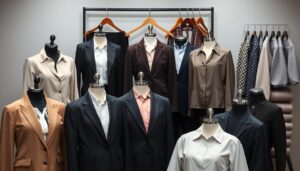
The one-step-polished rule is practical: dress a little more refined than the everyday workplace, not several levels above it. If employees usually wear hoodies and sneakers, try a neat overshirt, pressed knit, dark trousers, or clean leather sneakers. If the office appears business casual, try a blazer or structured cardigan with a crisp shirt. If the field is formal or the role is senior, a suit or equivalent level of polish may still be the better choice.
This approach helps you communicate respect without looking disconnected from the team. For a deeper discussion of post-pandemic interview attire, the related piece on interview attire after remote work gives more context on reading company culture before choosing an outfit.
Video Interviews Still Need Full-Body Readiness
Camera Framing Affects Presence
For video interviews, many candidates focus only on the visible top half. That is understandable, but it can weaken readiness. If you are wearing a polished shirt with sweatpants, you may feel half-prepared. If you need to stand, adjust equipment, or answer the door before the call, the mismatch can create stress.
Dress as though the full outfit could be seen. This does not always mean a suit. It means the top, bottom, and shoes belong to the same level of formality. Solid colors often read better on camera than busy patterns, and clean grooming helps the face remain the focus. Check your camera angle, lighting, chair height, and background before the interview begins.
Body Language Works Better With Clothing That Fits
Fit affects nonverbal communication. A jacket that pulls across the back may restrict natural gestures. Sleeves that are too long can make hand movement look uncertain. A neckline that shifts constantly may draw your hands upward again and again. These small motions can distract from your answers.
Try the outfit while seated at the same desk or table you will use for the interview. Practice a greeting, a short explanation of your experience, and a closing thank-you. Notice whether the clothes let you breathe, gesture, and hold eye contact naturally. Your clothing should give your posture a stable frame.
Practical Outfit Choices By Interview Setting
In-Person And Hybrid Interviews
In-person interviews require more attention to shoes, outerwear, bag, and movement through the workplace. You may meet a receptionist, sit in a waiting area, walk through an office, or meet several people. Every step gives visual information about preparedness.
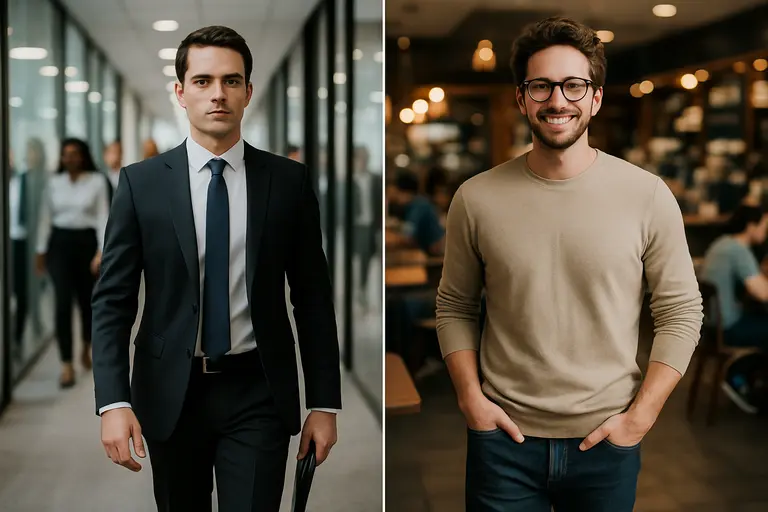
- Formal or senior role: suit, polished separates, conservative shoes, and restrained accessories.
- Business casual office: blazer, structured knit, button-front shirt, pressed trousers, skirt, or clean loafers.
- Casual workplace: refined denim only if it is dark, clean, and paired with sharper pieces.
- Hybrid interview day: choose an outfit that works both on camera and in the room.
If you are unsure, avoid extremes. A simple blazer, clean shirt, well-fitting trousers, and polished shoes can cross many settings without feeling theatrical.
Casual Companies And Senior Roles
Casual culture does not erase hierarchy. A senior candidate may need to look ready to represent the organization, meet clients, or lead teams. That does not always require a traditional dark suit, but it does call for structure. A refined jacket, high-quality knit, pressed trousers, and clean shoes can signal authority while still respecting a relaxed company environment.
For entry-level candidates, neatness and fit often matter more than expensive clothing. A pressed shirt, clean footwear, controlled grooming, and an outfit free of stains or distracting wear can show seriousness without pretending to be someone else.
Ethical Personal Branding Through Attire
Use Clothing To Clarify, Not Mislead
Personal branding is not costume work. The goal is to help the interviewer understand your judgment, respect for the meeting, and awareness of context. Do not dress in a way that makes you feel false or physically uncomfortable just to match an imagined standard. The stronger choice is an honest version of your professional self.
This is especially true in trust-based settings. A calm, coherent appearance supports the message that you are prepared and transparent. Across related professional services, clarity matters; Polygraphianz offers insights into maintaining trust and presentation.
Keep Comfort From Looking Careless
Comfort becomes a problem only when it reads as lack of effort. Soft fabrics, stretch, flat shoes, and relaxed cuts can all be professional if they are clean, intentional, and appropriate to the interview. A knit blazer may feel easier than a structured suit jacket. Polished loafers may feel better than heels. A pressed overshirt may work better than a stiff button-front shirt in a casual technical interview.
Ask one practical question: would this outfit help me be taken seriously by someone who does not know me yet? If yes, and you can sit and speak comfortably in it, you are close to the right balance.
Interview Dress Norms As A Personal Brand Signal
Interview Dress Norms will probably keep varying by company, level, and interview format. That uncertainty does not have to make dressing harder. Use the available clues, raise the polish slightly above the expected workplace norm, and choose clothes that let your posture, voice, and gestures stay calm.
The most effective interview outfit is not the most formal one in every case. It is the outfit that shows judgment. It respects the setting, supports your body language, and gives the interviewer fewer reasons to question your readiness. Professional comfort is not a compromise. It is a practical way to present yourself clearly in a hiring culture where the old rules no longer apply evenly.