A company culture wardrobe is not about hiding your personality. It is about presenting yourself with enough awareness that a hiring team can focus on your skills, judgment, and fit for the role. As Tanisha Grant, I see wardrobe planning as part of personal branding: your clothing should support your message, not compete with it.
Job seekers are facing a less predictable dress environment than they did a decade ago. A workplace may call itself relaxed, hybrid, creative, traditional, values-driven, fast-moving, or client-facing, and each phrase can suggest a different level of polish. The safest approach is not to guess from one outfit photo or copy a stranger online. It is to gather visible clues, choose a practical level of formality, and make sure every item helps you move, sit, speak, and listen with confidence.
Build a Company Culture Wardrobe From Evidence
Start with evidence before you start with clothes. A job posting, company website, employee photos, leadership pages, recruiting videos, and public social posts can all offer clues. The point is not to judge employees by appearance. The point is to understand how the organization presents itself and how people in similar roles tend to show up.
Company Culture Wardrobe Signals To Study
On August 6, 2026, the Associated Press reported that candidates could look at a company’s website, social media, and values statements for clues about workplace formality. The same report noted that words such as “innovative,” “fresh,” or “trailblazing” may suggest a more relaxed style, while “traditional,” “heritage,” or “values” can point toward a more formal image, according to AP reporting on interview attire.
Treat those clues as signals, not guarantees. A finance team inside a relaxed tech company may still expect more structure than the engineering floor. A creative nonprofit may value individuality but still expect neatness during donor meetings. A customer-facing role may call for a cleaner, more polished version of the company’s everyday style.
Read Formality Before Picking Clothes
Look for repeated patterns. Are employees wearing blazers, collared shirts, dresses, trousers, polos, jeans, sneakers, or branded casual wear? Are leaders photographed in suits while staff appear more relaxed? Are client-facing staff presented differently from internal teams? These visual cues can help you decide whether to aim for business professional, business casual, smart casual, or a polished casual look.
The national data supports why this step matters. In a Gallup poll conducted August 1-23, 2023, 41% of U.S. workers said they wore business casual to work, 31% wore casual or street clothes, and only 3% wore business professional clothing or suits, according to Gallup workplace attire findings. That does not mean a suit is wrong. It means the old assumption that every interview requires the same formal outfit no longer matches how many U.S. workplaces dress.
Match Polish To The Interview Setting
Your interview outfit should show respect for the opportunity and awareness of the environment. Those two goals can exist together. A polished look does not have to mean stiff, expensive, or uncomfortable. It means clean lines, intentional choices, and clothing that lets you participate fully in the conversation.
Use The One-Level-Up Rule Carefully
A practical rule is to dress one step more polished than the company’s daily norm. If employees appear to wear jeans and T-shirts, consider dark denim or trousers with a neat top, jacket, cardigan, or refined shoes. If the office appears business casual, choose a more structured version of business casual. If the company is formal or client-facing, a suit or coordinated separates may still be the better choice.
This approach protects you from two common mistakes: dressing so casually that the interview feels underprepared, or dressing so formally that your image feels disconnected from the team. If you want a deeper explanation of modern business casual choices, this related article on business casual for job seekers can help you refine the middle ground.
Keep Fit And Comfort Visible
Fit and comfort affect how you carry yourself. If you are pulling at a waistband, adjusting sleeves, or worrying about new shoes, the distraction can show in your posture and facial expression. The AP report from August 6, 2026 also advised candidates not to wear brand-new items to an interview without testing them first. That is sound image advice because confidence is easier to project when your clothing has already passed a real-life test.
Try the full outfit before interview day. Sit down. Walk. Raise your arms. Test the shoes. Check how the fabric looks in natural light and on camera if the interview is virtual. Make sure the neckline, hem, and layers stay in place when you move. Small issues at home can feel much larger in a lobby, elevator, or video call.
Make Your Outfit Support Your Personal Brand
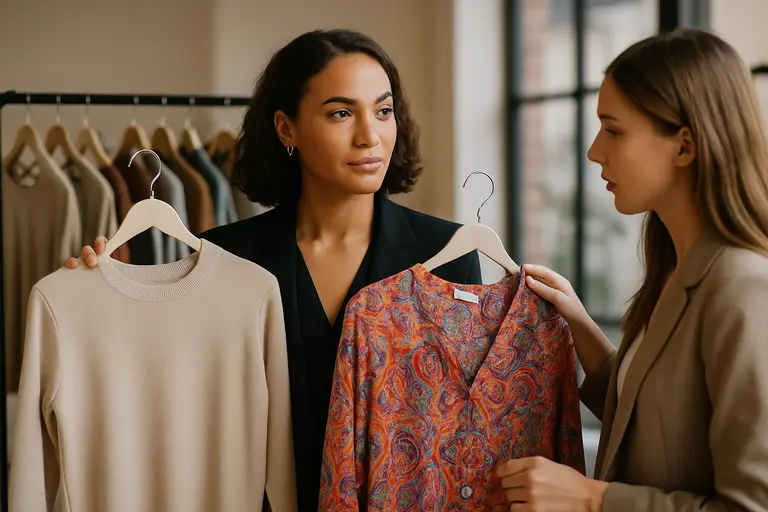
Personal branding is not costume design. It is the alignment between how you want to be understood and how you consistently present yourself. Clothing is one part of that alignment, along with posture, speech, preparation, grooming, and follow-through.
Protect Individuality Without Ignoring Context
Your company culture wardrobe should leave room for identity. You do not need to erase color, texture, cultural expression, personal style, or creativity to look professional. The key is to control the message. A bold color can be effective when the fit is sharp and the rest of the outfit is calm. Distinctive jewelry can work when it does not distract from eye contact or conversation. Sneakers can be appropriate in some workplaces when they are clean and intentional.
Ask yourself three questions: Does this outfit fit the role? Does it fit the company’s visible culture? Does it fit the version of myself I want them to remember? If the answer is yes to all three, you are likely working in the right direction.
Prepare A Simple Interview Kit
A reliable interview kit reduces stress. You do not need a large wardrobe. You need a few pieces that can adapt to several company cultures. For many job seekers, that means a neutral jacket or cardigan, one pair of well-fitting trousers, one polished top, one clean shoe option, and one accessory that feels personal without taking over the look.
- For a casual workplace: dark jeans or simple trousers, a clean top, and a structured layer can communicate ease with polish.
- For business casual: trousers, a blouse or shirt, refined knitwear, loafers, flats, or clean low-profile shoes can work well.
- For formal settings: a suit, dress, blazer with coordinated separates, or another structured option may be more appropriate.
- For video interviews: choose colors that read clearly on camera, avoid distracting movement near the face, and test lighting ahead of time.
For people building a broader professional presence, wardrobe decisions also connect with bios, portfolios, proposals, and other public-facing materials. A helpful resource in this context is Interline Publishing, which offers publishing resources to support that wider professional image.
Company Culture Wardrobe For Job Seekers
A strong company culture wardrobe is built through observation, not panic shopping. Study the organization, choose one step above its everyday style, test the outfit in real conditions, and protect enough personality that your presentation still feels like you.
Review Before You Leave
Before the interview, take one full-length look and ask whether your clothing supports the conversation you want to have. Check cleanliness, fit, comfort, and context. Remove anything that feels like a distraction. Keep anything that helps you stand taller, speak clearly, and enter the room with calm focus.
Job seekers do not need to dress like someone else to be taken seriously. They need to show that they understand the room they are entering. That is the real purpose of a company culture wardrobe: it helps your expertise, preparation, and character become easier to see.