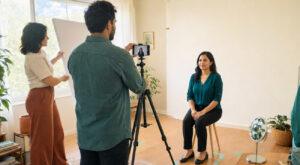
The safest job-interview outfit in 2026 is no longer automatically a dark suit, white shirt and conservative shoes.
It is also not whatever employees happen to wear on an ordinary Tuesday.
The better starting point is to understand the employer’s visual culture and then dress slightly more deliberately than the normal workplace standard. For a traditional financial or legal office, that can still mean a suit. For a business-casual company, it might mean tailored trousers, a polished shirt or blouse and a structured jacket. At a creative or technology company, clean separates and restrained personal style may communicate better judgment than formal clothing that looks disconnected from the environment.
That flexibility reflects a larger change in interview culture.
On September 24, 2026, The Washington Post examined shifting U.S. interview etiquette after recruiter Caitlin Wehniainen sparked an online debate by advising candidates not to walk into interviews carrying iced coffee. The story went beyond beverages. It noted that once-rigid expectations involving tattoos and dyed hair have loosened in many workplaces, while video interviews have created an entirely new set of presentation questions. The Washington Post’s interview etiquette report emphasizes that standards still vary by company and sector.
That is the central problem with deciding what to wear to a job interview in 2026.
The rules have become more flexible, but that does not mean presentation has become irrelevant.
Start With The Employer, Not Your Closet
Before choosing an outfit, investigate the company.
Indeed’s U.S. interview guidance, updated June 15, 2026, recommends researching the employer’s dress code before deciding what to wear. It also emphasizes that credentials and application materials remain central to the interview while clothing contributes to the candidate’s first presentation. Indeed’s job interview attire guidance
Start with the company’s own website.
Look at employee photographs on the careers page, leadership portraits, event photography and office images. A financial-services company where senior employees consistently appear in jackets communicates something different from a design studio where leadership wears knitwear and relaxed trousers.
LinkedIn and other official company social accounts can provide additional context, particularly photographs from conferences, presentations and ordinary office events.
Do not copy one employee’s outfit literally.
You are looking for the range of acceptable formality.
If nearly everyone appears in traditional tailoring, that is useful information. If executives appear in chinos, open-collar shirts and clean sneakers, that is useful too.
FinestImage has explored this same problem through interview-attire norms for job seeker branding: professional presentation works best when clothing supports the environment and the person rather than functioning as a costume. The site’s September 14 article notes how difficult interview attire has become to read as workplace clothing has grown less uniform.
Dress Slightly More Polished Than The Everyday Office
One useful principle survives the changing rules: an interview is not an ordinary workday.
Even if employees routinely wear casual clothing, arriving in the most relaxed version of that dress code can undershoot the occasion.
Indeed’s current business-casual guidance recommends researching employee clothing through company websites and social media and dressing somewhat more formally for an interview than the everyday workplace examples you find.
That does not necessarily mean jumping directly to a suit.
Imagine employees normally wear jeans, knitwear and sneakers.
An interview version might be tailored trousers or dark clean denim, a polished shirt or fine knit, a structured overshirt or blazer and clean understated footwear.
If employees normally wear business casual, an interview outfit can move toward the more polished edge of business casual or business professional.
If employees routinely wear suits because the role is in banking, accounting, law, government or another traditionally formal environment, a suit remains a logical starting point. Indeed’s June 2026 business-professional guidance continues to identify those sectors as common settings for more formal workplace dress. business professional attire guidance
The goal is not maximum formality.
It is appropriate effort.
A Suit Is Still Useful, But It Is No Longer Universal
The suit has not disappeared from interviews.
Its role has changed.
For a senior corporate position, legal interview, financial-services role, executive meeting or conservative client-facing position, coordinated tailoring can still be the most straightforward choice.
But wearing a suit simply because the event is called a job interview can produce a mismatch in less formal industries.
Consider an interview at a small product-design studio where everyone from junior designers to the founder works in relaxed tailoring, overshirts and sneakers.
A traditional dark suit and tie would not automatically be wrong.
It could simply communicate a different visual language from the company itself.
That does not mean candidates should deliberately dress down to prove cultural fit. It means interview clothing should demonstrate that you understood where you were going.
In 2026, situational awareness can be more useful than blindly following an old uniform.
Business Casual Is Often The Middle Ground
When information is limited, polished business casual remains one of the most adaptable starting points.
That can include tailored trousers, chinos, a skirt or structured dress paired with a button-down shirt, blouse, polo or fine knit. Depending on the company, a blazer, cardigan or structured jacket can raise the level slightly.
Indeed’s 2026 business-casual guidance includes trousers, slacks, khakis, blouses, button-down shirts, polos, sweaters, sport coats and blazers among common options, while noting that definitions vary among companies, industries and career levels. business casual attire examples
That variation is important.
“Business casual interview” is not one outfit.
A creative director, accountant, software engineer and hotel manager may all be interviewing at organizations described as business casual while facing very different visual expectations.
Use the label as a starting point, not a complete instruction.
Fit Matters More Than The Price Tag
Interview clothing does not need to be expensive.
Indeed’s June 15 guidance specifically notes that expensive clothing is not required for most interviews; visible effort and appropriate presentation are more important.
Fit can communicate that effort more effectively than a recognizable label.
Look at the shoulders of a jacket.
Check whether buttons pull across the torso.
Make sure trousers fall cleanly rather than collecting heavily around the shoes.
Sit down in the outfit before interview day. Clothing that looks excellent while standing may pull, ride up or become uncomfortable during a 45-minute conversation.
Check shirt collars and necklines.
Make sure a skirt or dress still feels appropriate and comfortable while seated.
The best interview outfit should allow you to stop thinking about it once the conversation begins.
If you spend the interview adjusting a collar, pulling down a jacket or worrying about uncomfortable shoes, the outfit is working against you.
Wrinkles And Condition Can Matter More Than Fashion
A simple outfit in excellent condition can create a more deliberate impression than an elaborate outfit that looks neglected.
Check for wrinkles.
Remove lint and pet hair.
Clean your shoes.
Look for loose threads, missing buttons, stains and stretched collars.
If you are wearing a jacket that has been stored for months, try it on several days before the interview rather than ten minutes before leaving home.
The same applies to shoes you rarely wear.
An interview is a poor time to discover that a pair of formal shoes becomes painful after fifteen minutes.
These details are not about appearing wealthy or fashion-conscious.
They are about removing visual distractions.
Neutral Colors Are Reliable, But They Are Not Mandatory
Navy, charcoal, brown, cream, white and other restrained colors remain useful because they coordinate easily and rarely dominate an outfit.
But professional clothing does not have to be colorless.
Burgundy, forest green, muted blue, rust, plum and other controlled colors can work well when they make sense with the rest of the outfit.
The useful question is not, “Is this color professional?”
Ask whether the complete outfit feels coherent for the employer and role.
A deep-green knit with charcoal trousers can look highly polished.
A burgundy blouse under a navy jacket can introduce personality without becoming the central event.
If you want to use a strong color, allowing the other pieces to become quieter often creates balance.
Your interviewer should remember the conversation more clearly than the shirt.
Patterns Need More Judgment On Video
For an in-person interview, restrained stripes, checks and prints can work perfectly well.
Video introduces another variable: the camera.
Indeed’s June 2026 Zoom-interview guidance recommends considering the company’s culture just as you would for an in-person meeting, while also paying attention to the background visible behind you. Its broader video-interview guidance recommends avoiding especially bright colors and visually busy patterns on camera. Zoom interview preparation
Fine repetitive patterns can also behave unpredictably on cameras and compressed video.
Before the interview, open the exact video application you will use.
Sit where you plan to sit.
Turn on the camera.
Look at the actual image.
A shirt that appears subtle in the mirror may become visually dominant inside a small video window.
The reverse can happen too: a beautifully textured dark outfit may lose separation against a dark background.
Test rather than guess.
Dress For A Video Interview From Head To Toe
The familiar joke about wearing a professional shirt with pajama pants during a video meeting is not particularly useful on interview day.
You may need to stand.
You may need to retrieve a document.
Your camera angle may change unexpectedly.
More importantly, getting completely dressed can help create a clear psychological transition into the interview itself.
Indeed’s August 14, 2026 virtual-hiring-event guide advises candidates to dress professionally much as they would for an in-person interview and notes that wearing professional trousers or a skirt remains sensible even when the interviewer is likely to see only the upper body.
But clothing is only part of your appearance on video.
Lighting, camera height and background become part of the visual presentation too.
A perfect jacket cannot compensate for sitting almost completely in shadow.
Your Background Becomes Part Of The Outfit
An in-person interviewer sees you inside the company’s environment.
A virtual interviewer sees you inside yours.
That makes the frame itself important.
Indeed recommends a neutral, tidy area for Zoom interviews and suggests removing clutter that could become distracting. It also advises positioning light so the face remains clearly visible.
Think about contrast.
A black jacket against a nearly black wall can cause your shoulders to disappear visually.
A white shirt against a bright white background can reduce separation.
You do not need to redesign your room.
You simply need enough distinction between yourself and the environment for the image to remain clear.
Glasses deserve a test as well.
If a lamp creates a bright reflection across the lenses, move the light rather than removing glasses you normally wear.
The objective is to look recognizably like yourself in a professional setting.
Tattoos And Dyed Hair Are Not Governed By One 2026 Rule
One of the clearest signs that interview presentation is changing is the discussion around tattoos, hair color and personal expression.
The September 24 Washington Post report notes that tattoos and dyed hair that were once widely treated as interview problems are often no longer automatic deal-breakers, while emphasizing that expectations vary across companies and sectors.
That distinction matters.
It would be misleading to tell every candidate with tattoos to cover them.
It would be equally misleading to promise that every employer will respond the same way.
A tattoo, piercing, beard, natural hairstyle or unconventional hair color does not determine someone’s qualifications.
But applicants preparing for a particular workplace can still research its policies and culture when deciding how they want to present themselves.
The larger 2026 shift is away from pretending there is one universally acceptable professional appearance.
Shoes Still Finish The Outfit
Shoes are easy to treat as an afterthought because candidates spend so much time thinking about jackets, shirts and tops.
For an in-person interview, they remain part of the complete visual impression.
Loafers, Oxfords, flats, boots and other polished styles remain easy options.
Minimal lifestyle sneakers may work in some casual and creative workplaces, but they should look intentional and clean.
Technical running shoes communicate something different from understated leather sneakers.
If you are unsure about the employer, slightly more polished footwear is generally easier to integrate than extremely casual footwear.
Comfort matters too.
You may walk from a parking area, train station or reception desk before reaching the interview room.
Choose something you can actually move in.
Accessories Should Support Rather Than Compete
Jewelry, watches, belts, bags, scarves and other accessories can add personality to an interview outfit.
They do not have to disappear.
But an interview is a useful moment for editing.
If an accessory constantly needs adjustment, makes noise when you move or becomes the first thing someone notices, consider whether it is helping.
A professional bag does not need to be a luxury briefcase.
It needs to carry what you require without creating unnecessary difficulty.
The same principle applies to fragrance.
An interview takes place at close conversational distance, often in a small office or conference room. Restraint is safer than turning fragrance into part of the room.
Creative Jobs Do Not Mean You Need To Dress Creatively
Candidates applying for design, advertising, photography, media, fashion or other creative roles sometimes feel pressure to demonstrate creativity through clothing.
You do not have to turn yourself into a portfolio.
Personal style can absolutely appear.
Color, texture, jewelry, interesting tailoring or contemporary footwear may fit naturally into a creative workplace.
But forcing an unusually dramatic outfit because the job is “creative” can feel just as artificial as wearing a conservative suit you would never otherwise choose.
Your portfolio demonstrates your creative work.
Your conversation demonstrates how you think.
Your clothing only needs to support the person delivering both.
Do Not Dress Like A Person You Think They Want
Interview clothing often becomes stressful because candidates start constructing an imaginary employee.
They ask what a lawyer looks like.
What a designer looks like.
What an executive looks like.
What a software engineer looks like.
Those stereotypes are increasingly unreliable.
Instead, look for overlap between your real style and the company’s professional range.
If you never wear ties and the workplace does not require one, adding a tie solely because “interviews require ties” may not help.
If you genuinely feel comfortable in tailoring and the environment supports it, wear it.
If you normally wear glasses, you generally do not need to remove them to create a supposedly cleaner appearance.
If your natural hair is part of how you present yourself every day, an interview does not require inventing another identity.
The aim is a polished version of you—not a temporary character.
Prepare The Outfit Before Interview Day
Do not make every clothing decision on the morning of the interview.
Try the complete outfit on.
Sit in it.
Walk in it.
Look at it in natural light.
If the interview is virtual, test it on camera.
If it is in person, consider the weather and commute.
Prepare an alternative layer in case the temperature changes.
Check that everything you need is clean and ready.
If you are uncertain about the company’s expectations, asking the recruiter about dress code is reasonable. Current Indeed guidance explicitly recommends contacting the recruiter or person who scheduled the interview when expectations are unclear.
That is more reliable than trying to decode vague internet rules.
The Best Interview Outfit Makes The Outfit Less Important
The purpose of interview clothing is not to win the interview by itself.
Clothing cannot replace relevant experience, thoughtful answers, preparation or the ability to explain what you can contribute.
The September 2026 debate over iced coffee, tattoos and changing interview etiquette demonstrates how easily candidates can become trapped in small rules while professional norms continue to evolve. Recruiters quoted by The Washington Post disagreed on some details, but the broader emphasis remained on preparation, judgment and understanding the environment.
That is also the most useful way to think about interview clothing in 2026.
Research the employer.
Understand the role.
Dress slightly more deliberately than an ordinary day in that environment.
Choose clothing that fits, is clean and lets you move comfortably.
Use color and personal style where they feel natural.
Test the complete presentation if the interview is on camera.
Then stop thinking about the outfit.
A successful interview look does not need to make you appear like a generic idea of a professional.
It should make it easier for the interviewer to meet the professional who is actually sitting in front of them.